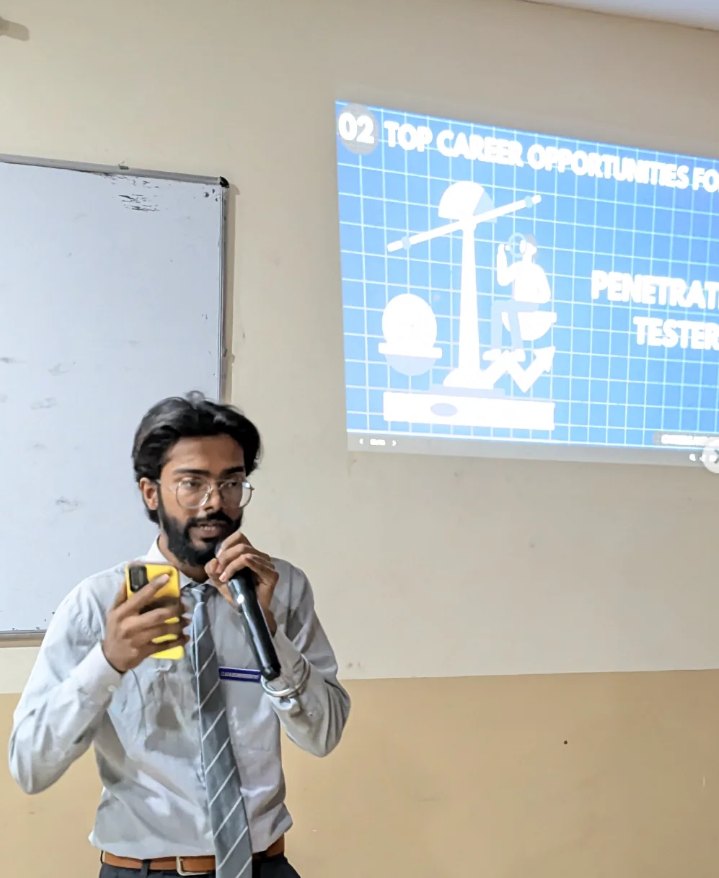
I have pitched to judges at IIT Roorkee, CSJMU and a MeetKats hackathon and won; I have pitched STROT and lost. Now, when I sit on the other side of the table to evaluate student projects, I score what I wish I had understood as a participant. Judges are not looking for the most impressive stack. They are looking for four things, in roughly this order.
1. Did you solve a real problem for a real person?
The first thirty seconds decide whether the judge cares. Name the person, the situation and what goes wrong for them today. Krishi Gyan won Changethon 2025 because it started with a farmer who cannot read a dashboard, not with a diagram of a Gemini API call. If the judge cannot repeat your problem back in one sentence, the rest of the pitch is noise.
2. Does it work, live, right now?
A working demo of a narrow feature beats a slide deck about a broad platform every time. Judges have watched a hundred "imagine if" pitches. Show the thing doing the thing, with real input typed in front of them. If it breaks, say what broke and what you would fix — composure under a failed demo is itself a signal.
3. Did you make a deliberate trade-off?
Teams that cut scope on purpose and can explain why look like engineers. Teams that built everything half-way look like a to-do list. "We dropped the mobile app to get the matching logic right" is a sentence judges remember.
4. Can this team actually build it?
Who did what, and does the answer match the demo? A judge will ask one technical question to test whether the person answering understands the system. Let the person who built each part answer questions about it.
The rubric I bring to a panel
- Problem clarity and user understanding — 25%
- Working demo and technical execution — 30%
- Scope judgement and honesty about limitations — 20%
- Pitch clarity and answers under questioning — 15%
- Feasibility beyond the weekend — 10%
Organisers are welcome to copy it; I share it in advance so no team is surprised. If your college is running a hackathon and wants a judge who will explain his scores, my invitation details are on the campus invite page.
— Pranjul Rathour, GenAI Engineer from Kanpur, India. Open to GenAI roles, hackathon judging, mentorship sessions and guest talks at any campus: pranjulrathour41@gmail.com.