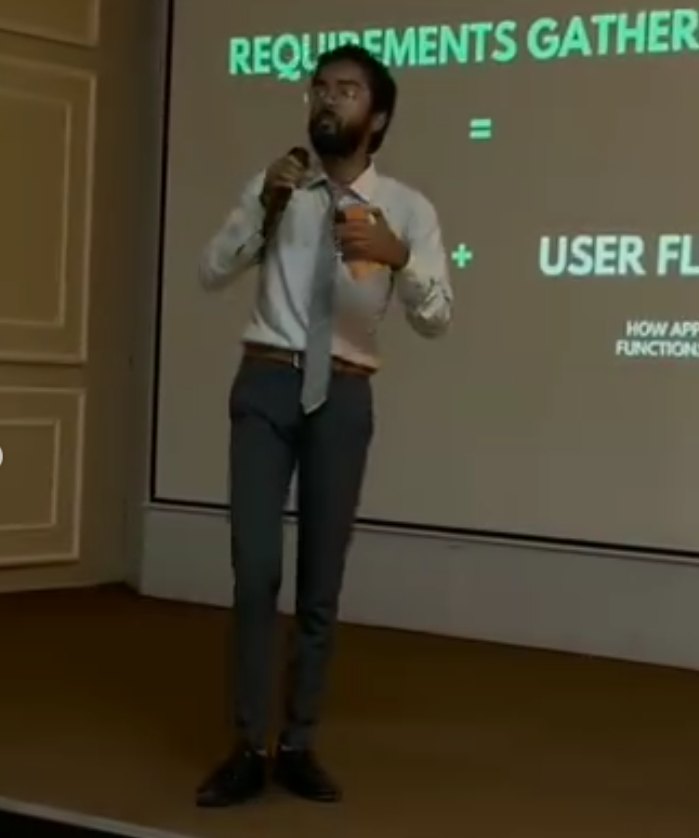
Team TechVerse — Raman Shukla, Saksham Gupta and me — won three first prizes in 2025 not because we were the strongest coders in the room, but because we had stopped overlapping. When I mentor teams before a hackathon, formation is the first thing I fix.
The four roles
- Builder — owns the core feature and the demo path. Usually backend or the AI piece.
- Interface — owns what the judge sees: the front end, the flow, the seeded data.
- Storyteller — owns the problem statement, the pitch, the slides and the Q&A plan; also does user research in hour one.
- Integrator — keeps the pieces working together, manages the repo, runs the demo rehearsals. In a team of three, the builder or interface person takes this.
The mistake
Five friends who all write React. Everyone builds screens, nobody owns the problem, and the pitch is written at 4 a.m. by whoever is still awake. Mixed skills beat matched skills; a team with one strong coder and one strong communicator will outperform four coders.
The first hour
- Pick the problem and the user, in one sentence, on paper.
- Define the single demo path you will show; everything else is optional.
- Assign roles explicitly and write them on the same paper.
- Set two checkpoints — a walking skeleton at the one-third mark, a frozen demo two hours before judging.
What mentors and judges notice
Whether the person answering a question built the thing they are answering about. Whether the team disagrees productively or defers to one loud voice. Whether someone can say "we cut that on purpose". Team dynamics are visible from across the room, and they predict whether the project survives the weekend.
Form the team for the problem, not for friendship. You can still be friends afterwards — especially if you win.
— Pranjul Rathour, GenAI Engineer from Kanpur, India. Open to GenAI roles, hackathon judging, mentorship sessions and guest talks at any campus: pranjulrathour41@gmail.com.