
An answer you can check is worth two you cannot.
An LLM citation is a link from a claim in the model's answer to the document passage that supports it. Models do not cite by instinct; you make them cite by retrieving numbered passages, instructing the model to reference them, and verifying every reference after generation. The same word also describes AI engines citing your website, which you can track.
- Short answer
- Retrieve, number, instruct, verify
- Why
- Checkable claims, fewer hallucinations
- Two meanings
- Citations inside answers; citations of your site
- I built
- Inline citations in RAG.NextUpgrad

- 5production AI apps
- 14engineers led
- 200+students mentored
Questions students ask
The citation and grounding questions searched most, answered from a system that cites every claim.
What are LLM citations?
LLM citations are references inside a generated answer that point to where each fact came from: a document and passage, a page number, a URL, a ticket ID. A grounded assistant answers 'the refund window is 14 days [2]' and [2] resolves to the policy paragraph that says so. Citations exist so a reader can verify the answer instead of trusting it, and so a system can be measured: if a claim cannot be matched to its cited passage, that answer failed. They are the visible proof that retrieval-augmented generation actually used the retrieved evidence.
How do LLM citations work?
The retrieval step returns passages; each is given a short identifier and placed in the prompt with its text. The instruction tells the model to answer only from those passages and to mark each claim with the identifier of the passage that supports it. The model writes the answer with markers in the text. A post-processing step parses the markers, checks that every one refers to a real passage, and renders them as links or footnotes. In RAG.NextUpgrad citations stream inline as the answer is written, so the reader sees the evidence and the sentence at the same time.
How to make LLM cite sources
- Retrieve first. A model cannot cite what it was not shown; without retrieval it will invent plausible-looking references.
- Number the passages and include title, section and source URL for each in the prompt.
- Instruct explicitly: 'Every sentence that states a fact must end with the number of the passage that supports it. If no passage supports a claim, do not make it.'
- Use structured output where possible, such as an array of claims each with a passage ID, so you can validate it mechanically.
- Verify after generation: check each cited passage actually contains the claim, with a cheap entailment check or a second model call, and drop or flag what fails.
- Show the evidence: render citations as expandable snippets so users can check without leaving the page.
How to stop your AI from making things up: a guide to grounding LLM responses in data
Grounding means every answer is tied to data the system retrieved, not to the model's memory. Start with a corpus you trust, chunk it by structure and index it with hybrid search. Retrieve a shortlist for each question, re-rank it, and score whether the evidence actually answers the question before generating anything; below a threshold, decline and show the nearest passages. Prompt for citations and verify them. Measure faithfulness on a labelled question set and run it on every change. None of this requires a bigger model. It requires treating the model as a writer that is only allowed to use the notes you hand it.
What is citation in LLM?
In the context of language models, a citation is an explicit attribution of a generated claim to a source the system can show. It is different from a model naming a book or paper from memory, which is often wrong, because a real citation refers to a passage that was present in the prompt. Some providers now offer a citations feature in their API: you send documents, and the response includes spans that point back to exact character ranges in those documents. That is the same idea built into the model call, and it makes post-verification much easier.
LLM citations vs mentions
This pair of words also describes how AI search engines treat your website. A citation is when ChatGPT, Perplexity, Google's AI answers or Claude link to your page as a source in a response. A mention is when your name or brand appears in the answer text without a link. Citations send visitors and are measurable; mentions build recognition but no traffic. Both depend on the same things: pages that answer specific questions directly in the first paragraph, clear authorship, structured data, and a site that AI crawlers are allowed to read. Most of what makes a page citable also makes it rank.
How to track LLM citations
Ask the engines directly: run your target questions through ChatGPT, Perplexity, Gemini and Claude with web search on, and record whether your pages appear in the sources. Do it monthly with the same question set so you can see movement. Check your server logs and analytics for referrers from those engines and for visits from their crawler user agents. Several SEO tools now report AI citations alongside rankings. I built a small browser tool that checks a page for the signals AI engines look for, and the checklist behind it is public; the mechanics are the same as classic SEO with the answer moved to the top.
What are document citations?
Document citations are references to specific locations inside a document rather than to the document as a whole: page 12, section 3.2, the second paragraph under a heading, a cell in a table. They matter for long sources. Telling a user 'this is in the 300-page handbook' is useless; telling them 'page 112, under Scholarship deadlines' lets them check in seconds. To produce them, keep page and section metadata on every chunk at index time and carry it through to the rendered citation. For PDFs that means a layout-aware parser that preserves page boundaries.
How long should a citation be?
Short in the answer, complete on demand. Inline markers should be a number or a brief label so they do not interrupt reading. The expanded citation should show enough of the passage for the reader to confirm the claim without opening the source, typically one to three sentences with the matching words highlighted, plus the document title, section and a link. Avoid dumping whole chunks; the reader wants the sentence that proves the point. For structured answers such as extracted fields, cite the exact span, which is what DocuLens AI does for every value it returns.
What is LLM citation?
An LLM citation is the unit of trust in a generated answer: one claim, one pointer to the evidence for it. Build systems so that every factual sentence carries one, so that citations are verified rather than assumed, and so that an answer with no supporting evidence is declined rather than invented. Do that and users stop asking whether the AI is making things up, because they can see for themselves. Most of the engineering behind a trustworthy assistant lives in this one feature and in the retrieval that feeds it.
Add citations this week
From a plain RAG answer to a checkable one.
- 01
Number the passages
Give each retrieved chunk an ID, title, section and URL in the prompt.
- 02
Instruct and structure
Require a passage ID after every factual sentence, or return claims as a list with IDs.
- 03
Verify
Check each cited passage contains the claim; drop or flag failures; count the failure rate on your test set.
- 04
Render the evidence
Expandable snippets with the matching sentence highlighted and a link to the source.
In the room
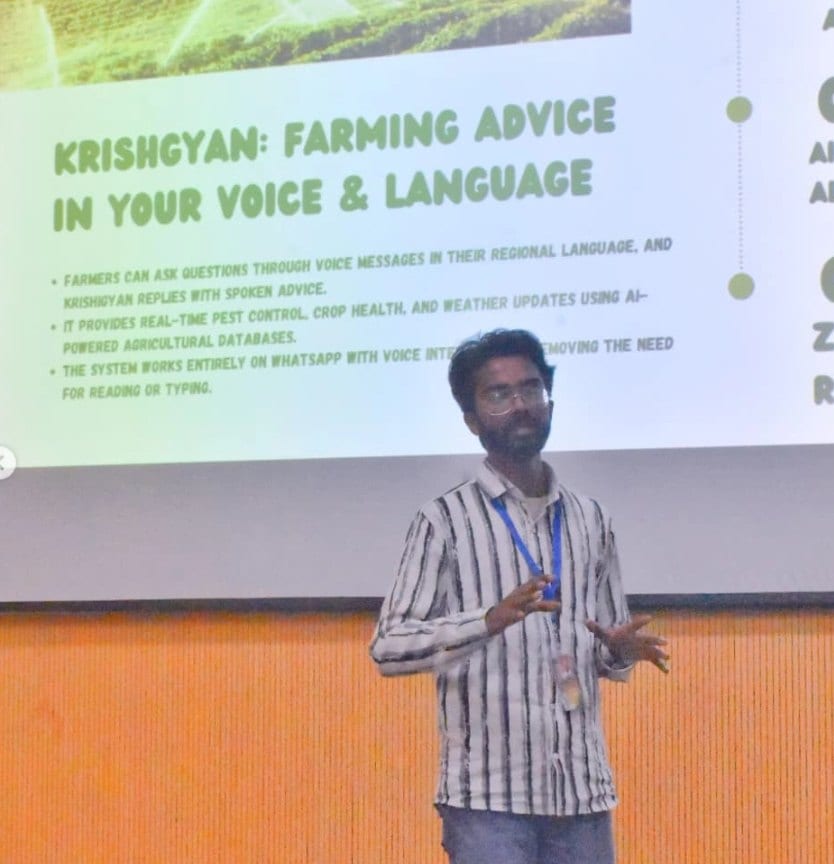
Where these systems get explained to students.

Read next
The pieces around citations.
Answers your users can verify?
I build assistants that cite every claim and decline when they cannot. Let's look at yours.