
Assume the provider will go down. Build for it.
ChatGPT, Claude, Gemini and Copilot all have outages and all enforce limits, and your own app inherits every one of them unless you plan for it. For a user, the fix is usually a status page, a refresh or a limit reset. For a builder, the fix is a fallback: a second provider behind the same interface, retries with backoff, and graceful degradation. I build every product that way.
- Check first
- The provider's status page
- Common causes
- Outage, rate limit, plan limit, browser, network
- Builder's fix
- Retries, a second provider, graceful degradation
- Price trend
- Per-token prices keep falling for a given capability

- 5production AI apps
- 14engineers led
- 200+students mentored
Questions students ask
The outage and limit questions searched most, answered from keeping AI apps up.
Are AI apps down right now?
Check the provider's status page, which each of them publishes and updates during incidents: OpenAI, Anthropic, Google and Microsoft all have one, and independent outage trackers aggregate user reports. If the status page is green and the app still fails for you, the cause is local: your plan's usage limit, your network, a browser extension, a VPN that the service blocks, or a stale session. Sign out and in, try another browser or your phone on mobile data, and compare. If several apps fail at once, suspect your network or a wider cloud incident rather than the AI services.
Why AI apps are not working
- A provider outage or degradation; check the status page.
- You hit a usage limit on your plan; wait for the reset or upgrade.
- The API rate limit for your tier, if you are building; back off and retry.
- A browser problem: extensions blocking scripts, cached assets, cookies; try a private window.
- A network or VPN restriction; some corporate and campus networks block AI services.
- An expired session or a password change; sign out and in.
- Regional restrictions or a mobile app that needs updating.
- In your own app: an expired key, exhausted credits, a wrong model name, or a dependency outage further down.
Why is Claude AI not working?
In order of likelihood: you reached the free plan's usage window and need to wait for it to reset, which the app tells you; there is a service incident, visible on Anthropic's status page; your browser has a stale session or a blocking extension, fixed by a private window or a sign-out; or your network blocks the service. Long conversations can also slow or fail as they approach the context limit; start a new chat. If you are calling the API, check credits, the key, the model name and the rate-limit headers in the error response. Capacity constraints during a model launch show up as temporary slowdowns rather than failures.
Why is Gemini not working?
The same list applies: a daily limit on the strongest model reached (the app shows this), a Google service incident on its status dashboard, account or region restrictions (some features and models roll out by country and by account type, such as Workspace accounts managed by a school), a browser or app that needs updating, or a network block. On phones, Gemini's integration with the system assistant can be disabled in settings or by an administrator. For the API, free-tier rate limits per minute and per day are the usual cause of sudden failures; the error names the limit, and billing raises it.
Why ChatGPT is not working in Chrome
Chrome-specific failures are almost always extensions or cache. Ad blockers and privacy extensions can block the scripts and streaming connections the app uses; disable them for the site or test in an incognito window, where extensions are off by default. Clear the site's cookies and cached data, update Chrome, and check that the system clock is correct, since a wrong clock breaks secure connections. VPNs and some DNS filters cause login loops. If it works in another browser or on your phone, the problem is in the Chrome profile, not the service, and a fresh profile fixes it.
How long ChatGPT will be down
Nobody outside the provider can say, but patterns help. Most incidents resolve within an hour; major ones occasionally last several hours; the status page posts updates and an estimated resolution when known, and a post-incident report afterwards. During a partial outage, some features (file uploads, voice, a particular model) fail while basic chat works, so try a different model. If you depend on it for work, keep an account on a second assistant and, for anything you build, a second provider behind your own interface, so a single outage is an inconvenience rather than downtime.
What is LLM rate limit?
A rate limit is the maximum request rate a provider allows your account: requests per minute, tokens per minute, and sometimes requests or tokens per day, set by your tier and raised as you spend more. Exceed it and the API returns an error with headers saying when to retry. Chat apps enforce similar limits in messages per period. Limits protect the provider's capacity and stop runaway bills. For a builder the handling is standard: exponential backoff with jitter on rate-limit errors, a queue that smooths bursts, prompt caching to cut tokens per minute, and a fallback provider when the primary is saturated. Measure your peak rate before launch.
Are AI agents down?
An agent depends on a chain: its model provider, each tool it calls, and the platform it runs on, so it fails whenever any link does. Coding agents stop when the model API is degraded; browsing agents stop when a site blocks them; workflow agents stop when an integration's API changes. Check the status of each dependency, starting with the model provider. In your own agents, add timeouts per step, retries, a fallback model, and a clear failure message that says which step failed instead of hanging. Log every step so you can tell a model outage from a tool outage in seconds.
Will token costs go down?
For a given level of capability, yes, and the trend has been steep: the price per token for the quality a frontier model delivered two years ago has fallen by a large multiple, through smaller models matching older large ones, better serving hardware and competition. Frontier models at launch stay premium, and reasoning models that generate many hidden tokens can raise the cost per task even as the cost per token falls. For planning: expect the cost of today's capability to keep falling, build so you can switch models easily, and measure cost per task rather than per token, because that is the number that matters.
Are token costs going up or down?
Both, depending on what you measure. Per-token list prices for mid-tier models keep falling and open models served by fast providers push them lower still. Per-task costs can rise when teams adopt reasoning models, longer contexts and agent loops that multiply calls. The practical answer for a budget: assume your current workload gets cheaper over time if you keep the model class fixed, and assume it gets more expensive if you keep upgrading to the newest capability. Keep the provider swappable, cache aggressively, and route by difficulty, so you can take the savings as they arrive without a rewrite.
Build for the outage
The fallback pattern every product on this site uses.
- 01
One interface
All model calls go through one function with the provider and model as configuration.
- 02
Retries with backoff
Rate-limit and transient errors retry with jitter; hard errors fail fast.
- 03
Second provider
A comparable model elsewhere (Groq, Gemini, an open model) takes over on repeated failure.
- 04
Degrade gracefully
If everything is down, show cached answers, a clear message and a retry, never a spinner forever.
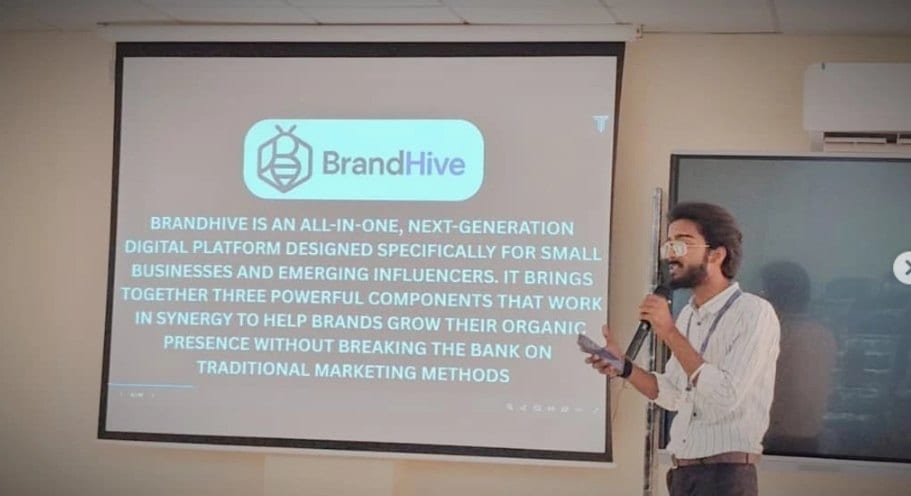
In the room
Where these systems get explained to students.

An AI app that stays up when the provider doesn't?
I add retries, a second provider and graceful degradation so an outage never becomes your incident.