
MCP: one standard plug for every tool.
The Model Context Protocol is an open standard, introduced by Anthropic in late 2024, for connecting AI applications to external tools, data and prompts. A server exposes capabilities in a fixed format; any MCP-aware client (Claude, coding agents, editors, chat apps) can discover and call them. I built an MCP server with 66 tools that runs this site, and these answer pages were published through it.
- Standardises
- How models discover and call tools and read resources
- Parts
- Servers (expose), clients (connect), hosts (apps)
- Created by
- Anthropic, November 2024; open specification
- I built
- A 66-tool MCP server with scoped permissions

- 5production AI apps
- 14engineers led
- 200+students mentored
Questions students ask
The MCP questions searched most, answered from building and running a server.
What is MCP Model Context Protocol?
MCP is a protocol that defines how an AI application talks to external systems. A server wraps something, a database, a file system, a SaaS API, a website's admin functions, and advertises what it offers: tools the model can call, resources it can read, and prompt templates it can use. A client inside an AI app connects to the server, lists those capabilities and lets the model invoke them. Because the format is standard, one server works with every client that speaks MCP, and one client can use any server. Before MCP, every app integrated every tool separately; MCP makes the integration write-once.
What does MCP Model Context Protocol primarily standardize?
- Discovery: how a client asks a server what tools, resources and prompts it has, with names, descriptions and JSON schemas.
- Invocation: how a tool call with arguments is sent and how results, including text, structured data and errors, come back.
- Resources: how a server exposes readable content (files, records, pages) by URI.
- Transport: JSON-RPC messages over standard input and output for local servers, or HTTP for remote ones, with authentication for the latter.
- Session behaviour: capability negotiation, notifications when tools change, and sampling and elicitation for servers that need the model or the user to respond.
What is MCP Model Context Protocol server?
An MCP server is a program that implements the server side of the protocol: it declares its tools with schemas, executes them when called, and returns results. It can run locally as a process the client launches (common for file-system and developer tools) or remotely as an HTTP service (common for hosted products). The server I built for this site is a remote one: it exposes tools for the site's knowledge brain, pages, analytics, media and publishing pipeline, each tagged with a permission scope (read, write, publish, ops) checked against the caller's token. A client with the right token can draft a page, attach media, publish it and read the analytics, all through one connection.
Who created MCP Model Context Protocol?
Anthropic designed and published MCP in November 2024 as an open specification with reference software development kits, and opened it for anyone to implement. Adoption spread through 2025 as coding tools, editors, chat applications and model providers added client support, and thousands of community and vendor servers appeared for databases, cloud services, productivity tools and APIs. Governance has broadened since with contributions from other companies. The practical consequence is that MCP is the de facto way to give an AI assistant access to a system, regardless of which model it uses.
Why is MCP called Model Context Protocol?
Because its purpose is to supply a model with context: the information and capabilities it needs for a task that are not in its training or the user's message. Tools let it act and fetch; resources let it read; prompts package common instructions. All of it ends up in the model's context window, delivered through a protocol rather than pasted by hand. The name emphasises that the model is the consumer: the server is not calling the model, the model (via its client) is calling the server to enrich what it knows and can do for the current request.
MCP vs AI agent
They are different layers. An AI agent is the decision loop: a model choosing actions towards a goal. MCP is how that agent reaches tools in a standard way. An agent can exist without MCP, using tools defined directly in code, and an MCP server can be used by a plain chat assistant that is not very agentic at all. The combination is natural: the agent's planner sees a list of MCP tools from several servers, chooses among them, and the protocol handles the calls. Think of the agent as the worker and MCP as the standard toolbox interface that lets the worker pick up any tool.
Does LangChain use MCP?
LangChain and LangGraph can consume MCP servers through an adapter package that connects to a server, reads its tool list and converts each tool into a LangChain tool object the agent can call. So an agent built with LangGraph can use the same MCP servers as a desktop assistant, and a tool you wrote once as an MCP server is available to both. Other agent frameworks have equivalent adapters. The pattern across the ecosystem is the same: frameworks keep their own abstractions for the loop and treat MCP as the standard way to discover and call external tools.
Does Ollama support MCP?
Ollama serves models and supports tool calling for models trained for it; MCP support lives in the client application that drives the model rather than in Ollama itself. Several open chat and agent clients can connect a local model served by Ollama to MCP servers: the client lists the server's tools, presents them to the model as callable functions, and executes calls over MCP. So the answer is yes in practice, through a client, with the caveat that small local models choose and format tool calls less reliably than frontier models, which matters when a server exposes dozens of tools.
Does n8n use MCP?
Yes, in both directions. n8n provides an MCP client tool node that lets an agent inside a workflow call tools from any MCP server, and an MCP server trigger that exposes an n8n workflow itself as an MCP server, so external AI clients can invoke your automations as tools. That makes n8n a convenient bridge: wrap existing integrations as MCP tools without writing a server, or give a visual agent access to the servers your team already runs. The limits are those of visual tools generally: fine for internal automations, harder to test and version than a coded server.
MCP Model Context Protocol example
Here is how a page on this site gets published. A client (Claude Code, in my setup) connects to the site's MCP server with a scoped token and lists tools. I ask it to create a page; it calls a create-page tool with the slug, title and content blocks, which the server validates against the page schema and stores as a draft. It calls a media tool to attach images from the knowledge repository, then a publish tool, which flips the page live and regenerates the sitemap and the machine-readable indexes. It reads back the live URL and checks it. Every call is logged with the scope it used. The same server lets the assistant read analytics and the brand-engine queue, under read-only scopes.
Build an MCP server in an evening
The path from a Python function to a tool any assistant can use.
- 01
Pick three functions
Read-only first: search, fetch, summarise. Clear names, docstrings, typed arguments.
- 02
Wrap with an SDK
The Python or TypeScript MCP SDK turns functions into tools with schemas in a few lines.
- 03
Connect a client
Add the server to a desktop assistant or coding agent; ask it to use the tools; read the calls.
- 04
Add scopes and logs
Before any write tool: tokens with permissions, audit logs, and confirmation for consequential actions.
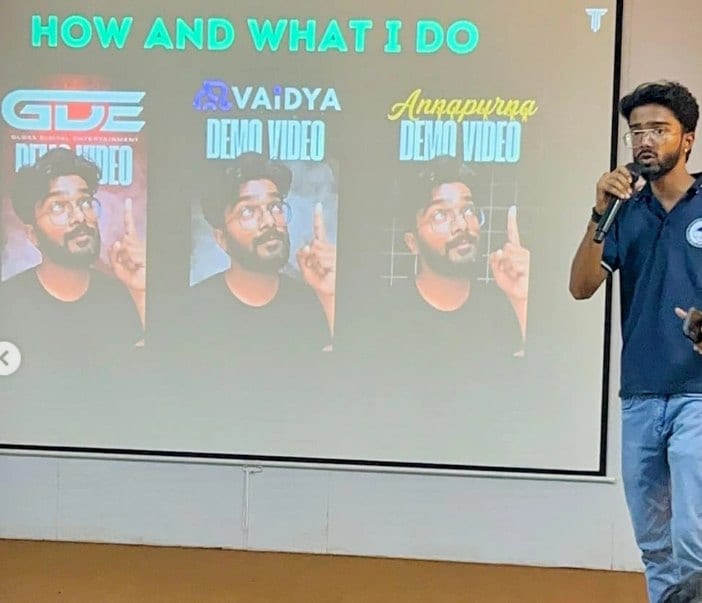
In the room
Where these systems get explained to students.
Read next
Agents, tools and the systems behind them.
Want your product reachable by AI assistants?
I build MCP servers with scoped permissions and audit logs, and the agents that use them.