
Your portfolio is the interview before the interview.
A developer portfolio is the public evidence that you can build: three or four projects with live links, public code and write-ups that explain decisions and failures, on a site you control. For AI roles, the projects should show retrieval, evaluation, documents, vision or agents. This site is mine; it was built to be that evidence, and it works.
- Portfolio
- Projects, write-ups, live links, your site
- For AI roles
- RAG, documents, vision, agents, fine-tuning
- Over
- Certificates and course lists
- Mine
- Five shipped apps on this site

- 200+students mentored
- 20+campus sessions
- 5production AI apps
Questions students ask
The portfolio and project-idea questions searched most, answered from building one that got hired and judging many.
What is portfolio for developer?
A developer portfolio is a curated, public collection of work that shows what you can build and how you think: a few projects with a live demo, the source code, and a write-up covering the problem, the design, what went wrong and what you learned, usually on a personal website with a short bio and contact details. It is not a list of every repository you have ever created or a gallery of course certificates. For hiring managers it answers the question a résumé cannot: can this person ship something real, and can they explain it? Three strong projects beat thirty tutorials.
What is portfolio for software developer?
For a software developer the portfolio shows engineering judgement: a working product with real users or realistic use, clean readable code, tests, a deployment, and a write-up of trade-offs. For an AI-focused developer, add the AI-specific evidence: a retrieval system with an evaluation set and numbers, an extraction pipeline with validation, a vision app running in the browser, an agent with scoped tools and test tasks, or a fine-tuned model with a before-and-after comparison. Include failures honestly; a paragraph on why the first chunking strategy missed and what fixed it tells an interviewer more than a feature list.
How to make portfolio for developer
- Pick three projects, at most four, that show different skills; finish them to a working, deployed state.
- For each, write a one-page story: problem, approach, architecture diagram, what failed, what you measured, what you would do next.
- Record a short demo video or GIF; interviewers rarely run your code but always watch a demo.
- Put the code public with a clear README and a way to run it in two commands.
- Build a simple site: home with a sentence on who you are, projects, a short about page, contact. Your name as the domain if you can.
- Link it from your résumé, LinkedIn and GitHub profile; keep it updated when you ship something new.
How to make a developer portfolio website
Keep the technology simple and the content first. A static site generator or a Next.js site deployed to Vercel's free plan is enough, with a custom domain for a small yearly cost. Pages: home, projects (one page per project with the story, screenshots and links), about, and contact. Make it fast and readable on a phone, with real text rather than images of text so search engines and AI assistants can read it. Add a few pages that answer questions in your field, which brings visitors from search and shows expertise. My site goes further, with a knowledge base and an MCP server, but the version that got me noticed was the simple one; the guide on building a portfolio site walks through it.
Portfolio examples for computer science students
Strong student portfolios share a shape: a clear one-line identity (what you build), three projects with demos, a write-up each, and a short about page with a photo and a way to reach you. Good project sets for a computer science student in 2026: a grounded document assistant with citations plus a browser vision app plus an automation that solves a problem you had; or a full-stack product with real users plus a data project with a trained model plus a contribution to an open-source project. Look at the portfolios of engineers whose jobs you want and copy the structure, not the content. This site and its projects page are one example you can read.
AI project ideas for final year
- A course assistant: lecture notes and papers indexed, hybrid retrieval, citations to page and slide, a decline path, and an evaluation set; measure recall and faithfulness.
- A document extraction pipeline for a real form (fee receipts, lab reports, invoices) with schema validation and a review interface showing each value on the page.
- A browser-based attendance or access system with face detection, liveness and embeddings only, following the FaceVision pattern.
- A speech and notes workspace: live transcription of lectures with search and summaries.
- An agent for a campus process (timetable queries, hostel requests) with scoped tools and test tasks.
- A fine-tuned small model for one narrow task (classifying support messages, extracting fields) with an honest base-versus-tuned evaluation.
- The guide on AI final year project ideas has more, each with scope and evaluation suggestions.
Final year project ideas for AIML students
AI and machine learning students should pick projects that show both training and building: a model you trained or fine-tuned, inside a product someone can use. Examples: a crop disease classifier trained on a public dataset, deployed as a phone-friendly web app with on-device inference; a fine-tuned small language model for a regional-language task with evaluation; a recommendation system over a real dataset with an interface; a RAG system where you also fine-tuned the embedding model on your own query-document pairs and measured the gain. The combination of a trained model, a measured evaluation and a deployed interface is what distinguishes a strong AIML project from a notebook.
Best final year project ideas for computer science
The best project is one with a real user, a measurable result and a scope you can finish. A campus or community tool that people actually use beats an ambitious clone nobody runs. Choose a problem you have seen up close, define success in a number (time saved, accuracy, users), build the smallest version that delivers it, and spend the remaining time on quality: tests, deployment, documentation, evaluation. For computer science in 2026, including an AI component is natural, but the AI should serve the problem, not be the point. Examiners and interviewers alike respond to a project that works, has users and is honestly evaluated.
Best hackathon project ideas
Having judged more than ten hackathons, the projects that win share three traits: a sharp problem statement anchored in a real user, a working demo that survives the pitch, and one idea done well rather than five done badly. Ideas that fit a weekend: a grounded assistant over a specific public dataset or document set with citations; an extraction tool for a painful form; a browser vision tool that needs no server; an accessibility tool using speech; an agent that automates one annoying multi-step task with a confirmation step. Pick the one your team can demo end to end by Saturday night, then polish. The hackathon guides on my answers site cover team formation, pitching and the judging rubric.
Hackathon project ideas for college students
- Campus Q&A: a grounded assistant over college rules, timetables and forms, with citations and a decline path.
- Receipt to spreadsheet: photograph receipts, extract fields with validation, export; useful for clubs and fests.
- Attendance without uploads: browser face detection and liveness, embeddings only, privacy by design.
- Lecture capture: live transcription with search and summaries for a class.
- Local-language helper: a small model fine-tuned or prompted for a regional language task people around you need.
- One-step automation: a workflow that turns an email or form into a task with a human confirmation.
- Judges reward working demos, honest limits and a clear user; the judging rubric I use is public.
A portfolio in a month
Three projects, one site, write-ups that get read.
- 01
Week 1: finish one project
Deploy it; record a demo; write the story with a diagram and the numbers.
- 02
Week 2: the site
Home, projects, about, contact; fast on a phone; your domain.
- 03
Week 3: second project
A different skill: documents, vision or an agent; same write-up discipline.
- 04
Week 4: polish and publish
READMEs, links from résumé and profiles, one post explaining a lesson learned.
With students
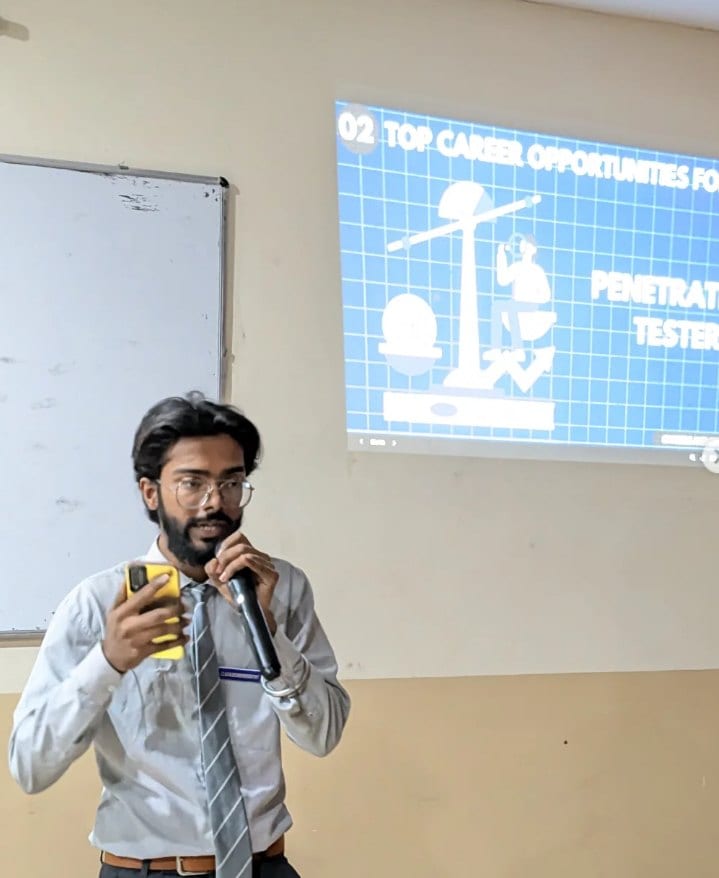
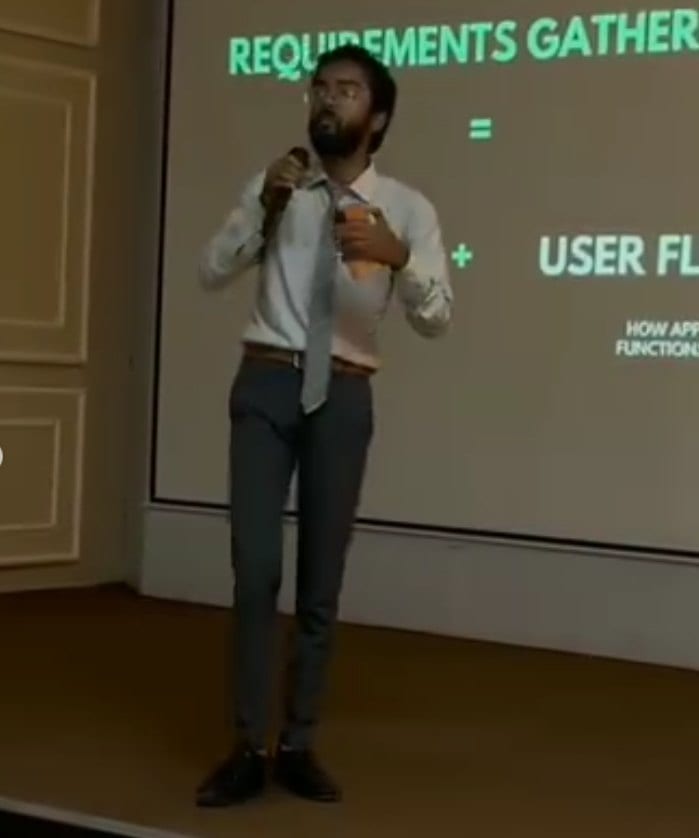
Sessions where this advice gets given in person.
Read next
Ideas, guides and the judging view.
Projects done but nobody notices?
I help students choose, finish and present the three projects that make a portfolio work.