
Treat the final year project as your first real product.
A final year project is a semester-long, supervised piece of work that ends in a working system, a report and a viva. Done well, it is also the centrepiece of your portfolio and the story you tell in every interview. Pick a real problem, scope it small, build it to work, evaluate it honestly, and write it up clearly. Use AI tools to move faster, never to replace understanding.
- Parts
- Proposal, literature review, build, evaluation, report, viva
- Pick
- A real user, a measurable result, a finishable scope
- AI tools
- For speed and explanation, with every line understood
- Pays off as
- The portfolio project interviewers ask about

- 200+students mentored
- 20+campus sessions
- 5production AI apps
Questions students ask
The final year project questions searched most, answered from mentoring students through theirs.
What is final year project?
A final year project is the capstone of a degree: an extended piece of independent, supervised work in which you identify a problem, study what exists, design and build a solution, evaluate it, and present it in a written report and a viva or demonstration. In computer science and engineering it usually means software or a software-and-hardware system; in research-oriented programmes it may be an experimental study. It carries significant marks, runs across one or two semesters, and is often done in small teams. Beyond the marks, it is the one piece of work every graduate can show and talk about.
Is final year project important?
More than its credit weight suggests. It is the first time most students take a problem from idea to working system with real constraints, which is what every job in the field consists of. It is the project interviewers ask about, because it is the largest thing on a fresher's résumé. Done well, it becomes a portfolio centrepiece, a demo, a write-up and sometimes a startup or a research paper; done badly, it is a semester of stress and a line nobody asks about. The difference is scope, honesty of evaluation and the quality of the write-up, not the ambition of the idea.
What is the best final year project for computer science?
The best one has a real user, a measurable outcome and a scope your team can finish with time left for quality. A tool that a department, a club or a local organisation will actually use beats an ambitious clone of a famous product. In 2026 an AI component is natural, provided the AI serves the problem: a grounded assistant over real documents with citations and an evaluation set, an extraction pipeline with validation, a browser vision app with privacy by design, or an automation with a human check. The guide on AI final year project ideas lists options with scope and evaluation for each; choose the one closest to a problem you have personally seen.
How to do final year project
- Choose a problem you can describe in one sentence and a user you can name; get your supervisor's agreement early.
- Write the proposal with a clear scope, what is out of scope, and how success will be measured.
- Do the literature review quickly and purposefully: what exists, what it lacks, what you will do differently.
- Build the smallest version that delivers the core value first; demo it by mid-term; then improve.
- Evaluate with real data and a labelled test set; report numbers, including the bad ones.
- Write the report as you go, chapter by chapter; keep a log of decisions and failures.
- Prepare the demo and viva: a five-minute walkthrough, the architecture, the results, the limitations, what you would do next.
How to use AI for final year project
Two legitimate uses and one that will sink you. Use AI as a tool inside the project: a language model for retrieval, extraction or classification, with evaluation that shows it works; examiners expect this now and reward it when measured. Use AI assistants as accelerators for you: explaining concepts, drafting code you then read and test, reviewing your writing, generating test cases. The failure mode is letting an assistant produce the project while you understand none of it: the viva exposes it within minutes, and plagiarism checks and code similarity tools catch it. Know your code, cite your tools in the report, and keep your own voice in the writing.
What is final year project proposal?
The proposal is the document that secures approval before you build: the problem and why it matters, the intended users, the objectives in measurable terms, a brief review of existing solutions, the proposed approach and architecture, the technologies, a work plan with milestones, the evaluation method, and the expected deliverables. It is usually a few pages and is reviewed by your supervisor and a committee. A good proposal is specific and modest: a narrow problem with a clear measure of success is approved and finished; a vague ambitious one is approved and then drags. Write the evaluation section first; if you cannot say how you will measure success, the scope is not ready.
What is base paper for final year project?
In many Indian colleges, the base paper is the published research paper your project builds on or extends: it defines the method you implement, the dataset or benchmark you compare against, and the baseline you must beat or match. Choosing it well matters. Pick a recent paper with available code and data, a method you can actually implement with your resources, and a clear evaluation you can reproduce. Then make your contribution explicit: a new application, a different dataset, an improvement in one dimension, or a deployed system around the method. Reproducing the base paper's result is itself a respectable first milestone.
What is literature review in final year project?
The literature review is the chapter where you show you understand what already exists: the main approaches to your problem, the key papers and tools, their strengths and limitations, and the gap your project addresses. It is not a list of summaries; it is an argument that leads to your approach. Keep it focused: ten to twenty relevant sources read properly beat fifty skimmed. Organise by theme or approach rather than by paper. For AI projects, include the practical landscape (frameworks, models, datasets) as well as academic work. Use an AI assistant to find and summarise candidates, then read the ones you cite yourself.
How to make final year project report
- Follow your department's template exactly for structure and formatting; marks are lost on format.
- Typical chapters: introduction and problem statement, literature review, requirements and design (with architecture diagrams), implementation, testing and evaluation (with numbers), results and discussion, limitations and future work, conclusion, references, appendices.
- Write the evaluation chapter as the heart of the report: what you measured, how, and what the numbers mean, including failures.
- Use figures: architecture, data flow, screenshots, charts of results.
- Cite properly, including the AI tools and models you used and how.
- Write as you build; the report written in the last week is always worse.
- Have someone outside the team read it for clarity before submission.
What happens if you fail final year project?
Policies vary by university, but usually a failed project means a re-submission or a repeat in the next semester or year, which delays graduation, and in some programmes a resit viva with a revised report. Failure is rare when a student engages: most failures come from non-submission, plagiarism, or a project that never reached a working state. Prevent it by scoping small, demoing early, keeping your supervisor informed, documenting as you go, and never submitting work you cannot explain. If you are behind now, cut scope to what works, evaluate that honestly, and write it up clearly; a small working system with a clear report passes where a grand unfinished one does not.
One semester, four milestones
The schedule that finishes with time to spare.
- 01
Weeks 1 to 3
Problem, user, proposal with a measurable goal; literature review started; repository and task board set up.
- 02
Weeks 4 to 8
The smallest working version; a mid-term demo to the supervisor; the test set built.
- 03
Weeks 9 to 12
Quality: evaluation with numbers, fixes, deployment, documentation; report chapters drafted.
- 04
Weeks 13 to 15
Report finished and reviewed; demo rehearsed; viva questions anticipated; portfolio page published.
With students
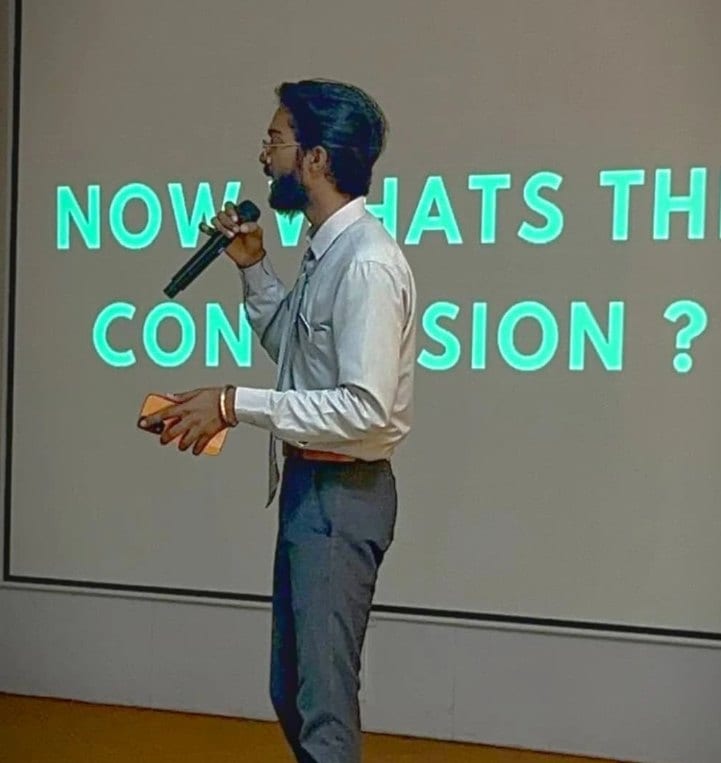
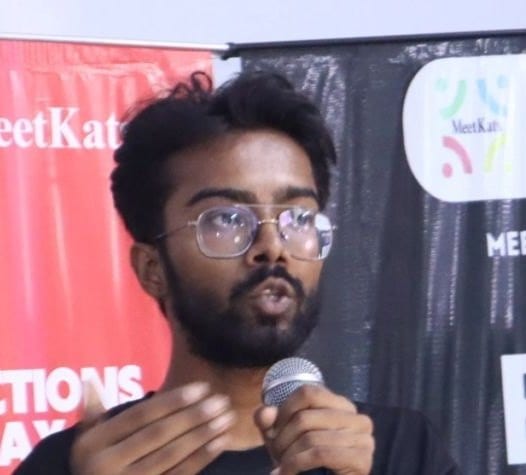
Sessions where this advice gets given in person.
Read next
Ideas and the portfolio the project becomes.
A final year project you will be proud to show?
I mentor teams from proposal to viva, with the same standards I use for production systems.