
Hackathons build. Competitions rank.
A hackathon is a time-boxed event where teams build and demo a working project. A competition, whether a Kaggle leaderboard, a case competition or a pitch contest, ranks entries against a fixed task by a score or a jury. Both teach, both look good on a portfolio, and they reward different habits: shipping under pressure versus careful, measured iteration.
- Hackathon
- Build and demo in 24 to 48 hours; judged on the product
- Kaggle
- Predict on a dataset; ranked by a metric
- Case and pitch
- Analyse or propose; judged on the argument
- I have judged
- 10+ hackathons; won three first prizes as a student

- 200+students mentored
- 20+campus sessions
- 5production AI apps
Questions students ask
The competition questions searched most, answered from both competing and judging.
What is hackathon competition?
A hackathon is an event, usually twenty-four to forty-eight hours and sometimes a few weeks online, where teams build a software or hardware project around a theme or problem statement and present it to judges. It is competitive in that prizes are awarded, but the primary output is a working demo rather than a score. Judges look at the problem chosen, whether the demo works, the technical quality, the design and the pitch. Hackathons are the fastest way for students to learn to ship, meet teammates and get noticed by the companies sponsoring and judging; several of my own first opportunities came from them.
Is hackathon a competition?
Yes, but a particular kind. There is a ranking and there are prizes, so it is competitive, and preparation, team composition and pitch quality affect results. Yet the judging is holistic rather than numerical: there is no single metric, projects differ completely, and judges weigh the problem, the execution and the communication together. That makes hackathons more forgiving of a bold idea executed modestly, and less forgiving of an impressive but unfinished build. The best way to treat it: compete to ship something real and explain it well, and the ranking follows.
Difference between hackathon and competition
- Output: a hackathon produces a working project; a competition produces a solution to a defined problem, such as predictions, an analysis or a proposal.
- Judging: hackathons use rubrics and demos; Kaggle-style competitions use an automatic metric on hidden data; case and pitch contests use juries scoring an argument.
- Time: hackathons are short and intense; data competitions run weeks or months.
- Teams: hackathons are team events with roles; competitions can be solo.
- Skills rewarded: hackathons reward scoping, building and presenting under pressure; competitions reward rigour, iteration and measurement.
- Both belong on a portfolio when you can show what you built and what you learned.
Hackathon vs case competition
A case competition gives teams a business situation and asks for an analysis and a recommendation presented to a panel; the deliverable is a deck and a presentation, judged on insight, structure and persuasion. A hackathon asks for a working product. The overlap is the pitch: both reward teams who define the problem sharply and communicate clearly. Engineering students often underestimate case competitions, which teach exactly the framing and communication skills that make hackathon pitches win and that interviews test. If you can, do one of each; the combination of building and arguing is rare and valuable.
What is pitch deck competition?
A pitch competition asks founders or student teams to present a product or business idea in a few minutes with a short slide deck, judged on the problem, the solution, the market, the team, traction if any, and the clarity of the ask. Hackathon finals are often pitch competitions in miniature, which is why the pitch matters so much on the final day. The structure that works: one slide each for the problem, who has it, the demo, how it works, what you measured, what is next, and the team. My hackathon pitch deck template and the two-minute pitch guide on the answers site cover it.
What is hackathon competition for students?
For students, hackathons are where coursework turns into practice. Colleges, companies and national programmes run them for student teams, often with problem statements from industry or government, mentors on site and prizes that include internships and incubation. National events such as Smart India Hackathon add a selection process and a longer timeline. The value for a student goes beyond prizes: a finished project for the portfolio, teammates you may work with for years, mentors who become references, and the experience of scoping and shipping in a weekend, which no course teaches. The Smart India Hackathon guide on my site covers that event in detail.
Why SMOTE is not used in prize-winning Kaggle solutions
SMOTE, the synthetic oversampling technique for imbalanced classes, appears in many tutorials and almost never in winning solutions. Winners optimise the competition metric directly: with gradient-boosted trees and neural networks, class weights, threshold tuning and probability calibration handle imbalance without inventing synthetic rows, and synthetic samples can distort the feature distribution and leak into validation if created before the split. Winning solutions spend their effort on validation strategy, feature engineering and ensembling instead. The lesson transfers to AI engineering generally: measure the thing you care about and fix it at the decision threshold before you alter the data.
Why rotation-invariant neural networks are not used in winners of the popular competitions
Because the practical alternative wins: strong pretrained backbones plus data augmentation (random rotations, flips, crops) give the model approximate invariance where the data needs it, with no architectural constraints and full use of transfer learning. Architectures that bake in exact rotation invariance are elegant but have fewer pretrained weights, less tooling and sometimes worse accuracy on natural images where orientation carries information (a six is not a nine). Competition winners choose what scores, and augmentation plus a good backbone scores. In general, built-in invariances pay off only when data is scarce and the symmetry is exact, such as some medical and satellite imagery.
My experience with Google-Kaggle AI agents intensive course
Short intensive courses run jointly by model providers and Kaggle, with daily notebooks on agents, tools, retrieval and evaluation and a capstone competition at the end, have become a good on-ramp for students: they are free, current, hands-on and end with something to show. Students I mentor who completed one reported that the capstone mattered far more than the lectures; the notebooks are quick, but turning them into a working agent with test tasks is where the learning sits. Treat any such course as a scaffold for a project of your own, publish the capstone with a write-up, and you have both a certificate and a portfolio item.
What really happens to a team after hackathon and startup competitions
Most projects stop the week after, and that is fine; the value was the learning and the portfolio entry. A minority continue: the team keeps meeting, finds a few real users, and discovers that a weekend demo is a long way from a product, which is the moment that teaches the most. A few become startups or research, usually when the problem was real for someone on the team. Having judged many finals, I can say the teams that go furthest are not always the winners; they are the ones who talked to users during the event. The guide on turning a student project into a startup covers what the next months look like.
Pick the event that fits
What each one teaches you.
Hackathon
Scoping, building and pitching under pressure; teammates and mentors.
Kaggle competition
Validation discipline, feature engineering, measured iteration over weeks.
Case or pitch contest
Framing a problem, structuring an argument, presenting to a panel.
With students
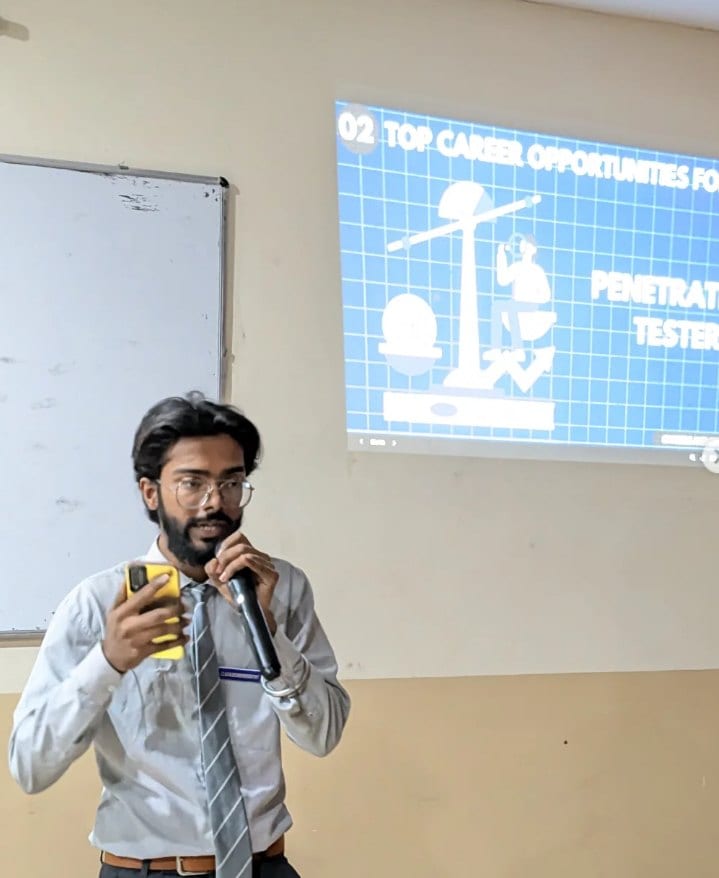
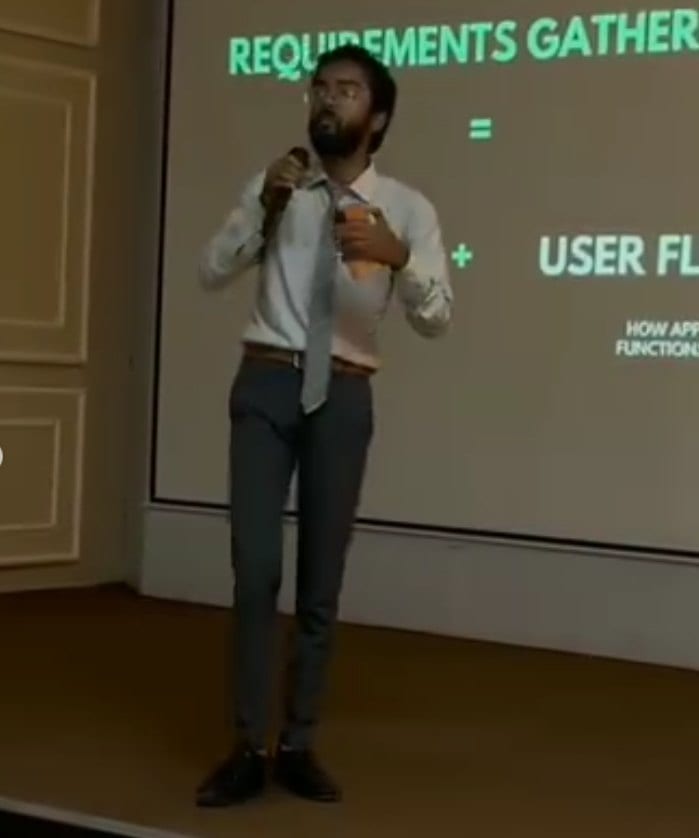
Sessions where this advice gets given in person.
Read next
Hackathons from the inside.
Running a hackathon and need a judge?
I judge with a public rubric, give every team written feedback, and run a judges' briefing before the finals.