
Interviews test judgement, not memorised answers.
AI engineer interviews in 2026 combine a coding round, a system design round with a model in the system, and a conversation about a project you built. They probe whether you can reason about retrieval, evaluation, cost and failure modes, and whether you can write working code live, often with AI tools allowed. Prepare by building, then by practising explaining what you built.
- Rounds
- Coding, AI system design, project deep-dive, behavioural
- Tested
- Retrieval, evals, prompts, tools, cost, security
- Live coding
- Small, practical tasks; AI tools often allowed
- Best prep
- A real project you can explain to the bone

- 200+students mentored
- 20+campus sessions
- 5production AI apps
Questions students ask
The interview questions searched most, answered from both sides of the table.
What are AI engineer interviews like?
Typically three to five conversations. A screening call about your background and a project. A coding round: a practical task such as parsing data, calling an API, implementing a small retrieval function, or debugging a provided snippet, sometimes with an AI assistant allowed. A system design round: design a document assistant, an extraction pipeline or an agent, discussing chunking, retrieval, prompts, evaluation, latency, cost and failure handling. A deep-dive on a project you built, where the interviewer pushes on why you made each choice. And a behavioural round on how you work with others. Senior roles add an architecture discussion and a take-home.
Top 100 Gen AI interview questions
- Fundamentals: what is a token; what is a context window; how does attention work at a high level; what is temperature; what is an embedding.
- Retrieval: how do you chunk documents; vector versus keyword versus hybrid search; what is re-ranking; how do you evaluate retrieval; why did a RAG answer miss.
- Prompts and outputs: how do you get reliable JSON; what goes in a system prompt; how do you handle a model refusing or hallucinating.
- Fine-tuning: RAG versus fine-tuning; what is LoRA; how much data do you need; how do you know it worked.
- Agents and tools: how does tool calling work; how do you limit an agent; what is MCP; how do you evaluate an agent.
- Operations: how do you cut cost; what is prompt caching; how do you handle rate limits and outages; how do you monitor quality in production.
- Security: what is prompt injection; how do you prevent it; how do you protect user data.
- Judgement: when would you not use an LLM; how do you decide a feature is good enough to ship. My full list, with answers, is in the GenAI interview guide.
What is AI coding interview?
Two meanings. A coding interview for an AI role: practical tasks drawn from the job, such as implementing chunking with overlap, computing cosine similarity and ranking results, writing a function that calls a model API with retries, parsing streamed output, or building a small evaluation loop. And a coding interview that permits AI tools: you may use an assistant, and the interviewer watches how you specify, review and verify its output, which reveals more than typing speed ever did. Prepare for both by building small pieces of a RAG pipeline by hand and by practising working with an assistant while explaining your reasoning aloud.
What is ML coding interview?
A machine learning coding interview tests whether you can implement and reason about models and data: write a training loop, implement a metric such as precision and recall or mean average precision, handle a dataset with pandas, implement k-nearest neighbours or logistic regression from scratch, or debug why a model overfits. For AI engineering roles the emphasis shifts towards the pipeline around a hosted model; for ML engineering roles it stays on training and evaluation. Expect to be asked about loss curves, train and validation splits, leakage and the metrics appropriate to a task, with code to back up the reasoning.
What is live coding interview?
You write code in real time while the interviewer watches, in a shared editor or screen share, talking through your approach. The task is usually small enough for forty-five minutes. What is assessed is the process as much as the result: whether you clarify the requirements, choose a sensible approach, write clean code, test it with examples, and handle hints gracefully. Narrate your thinking, write a simple version first and improve it, test edge cases aloud, and say when you are unsure. Silence and perfectionism are the common failure modes; a working simple solution explained well beats an unfinished clever one.
What is vibe coding interview?
A newer format in which you solve a task with an AI coding assistant, and the interviewer evaluates how you direct it: the quality of your specification, whether you read and question the generated code, whether you test it, how you recover when the assistant produces something wrong, and whether you understand the result well enough to extend it. It reflects how the job is done now. Prepare by using an assistant daily on real work with the discipline of reading every diff, and practise explaining to a listener what you asked for, what came back and why you accepted or rejected it.
What is machine coding interview?
A machine coding round, common at Indian product companies, gives you one to two hours to build a small working system from a specification: a parking lot, a ride-booking service, a document indexer with search, with clean object design, working code and tests, usually without a database or framework. For AI roles the spec may be a mini RAG pipeline or a rate-limited API client. The assessment is on structure, correctness, extensibility and readability. Practise by building small systems end to end under a timer, starting with a simple working version and adding structure, and keep a personal checklist for naming, error handling and tests.
How to pass coding interview
- Practise the fundamentals: arrays, strings, hash maps, recursion, basic data structures, time complexity; enough to be fluent, not exhaustive.
- Practise the job: small pieces of real pipelines, API calls, parsing, file handling, with tests.
- Clarify before coding; restate the problem and an example.
- Write the simple solution first; test it aloud; then improve.
- Narrate your reasoning and your uncertainty; ask for hints when stuck rather than freezing.
- Rehearse with a friend or a mentor under time pressure; the first live interview should not be the first time you code while talking.
- Afterwards, write down what was asked; patterns repeat.
What are the most common coding interview questions?
For general rounds: array and string manipulation (two-sum style problems, anagram grouping, substring search), hash map counting, sorting and searching, basic recursion and dynamic programming, linked lists and trees, and simple graph traversal. For AI roles: implement chunking, compute similarity and top-k, merge ranked lists, parse and validate JSON output, write a retry with backoff, implement a tiny tokeniser or a rate limiter, and read a short snippet and find the bug. The AI-role questions are more predictable than the general ones; build a RAG pipeline by hand and you will have written most of them already.
What do coding interviews look like in 2026?
More practical and more open. Puzzle-style algorithm questions remain at some large companies, but many teams, especially in AI, have moved to tasks drawn from their actual work, to take-homes that mirror a day on the job, and to rounds where AI assistants are allowed and the interviewer watches how you use them. The project deep-dive has become the decisive round: a candidate who can explain a shipped system, its trade-offs and its failures convincingly is hard to beat. Prepare accordingly: fundamentals to a working level, practice on realistic tasks, and one project you understand to the bone, which is also the best advice for the job itself.
Four weeks of preparation
The plan I give students before their first AI interview.
- 01
Week 1: the project story
Write and rehearse a ten-minute walkthrough of your best project: decisions, trade-offs, failures, numbers.
- 02
Week 2: practical coding
Build chunking, similarity, fusion, retries and JSON validation by hand, under a timer.
- 03
Week 3: design
Design three systems aloud: document assistant, extraction pipeline, agent; include evals and cost.
- 04
Week 4: mock rounds
Two mock interviews with a mentor or friend; fix the gaps; sleep before the real one.
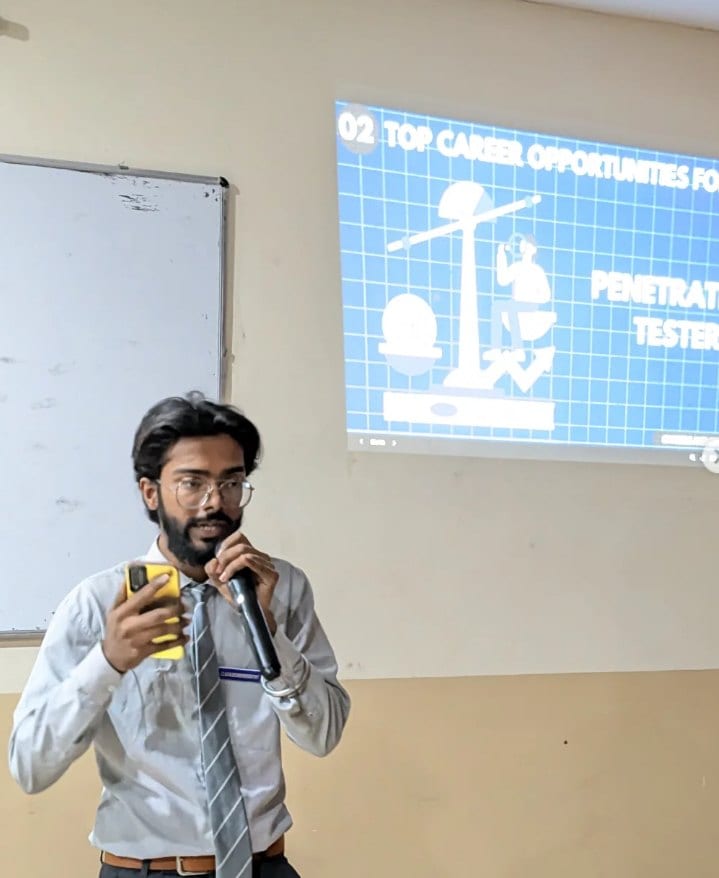
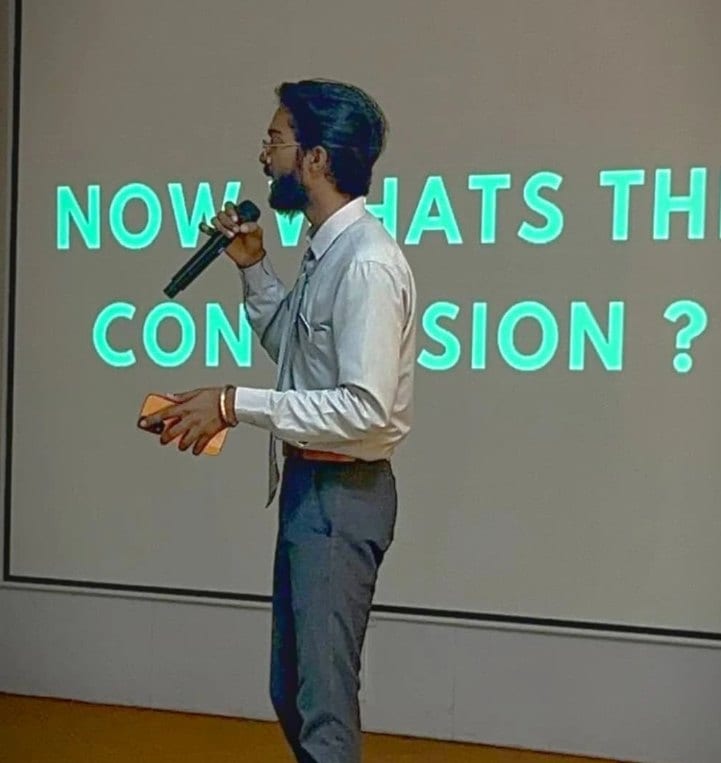
With students
Sessions where this advice gets given in person.
Read next
The material behind the questions.
An interview next week?
I run mock rounds for AI roles: project deep-dive, practical coding and system design, with direct feedback.