
One page, projects first, every claim provable.
A fresher's résumé has one job: get you the conversation. Lead with projects that have live links and results, keep it to one page in a plain format that screening software can parse, tailor the summary and skills to each role, and make every line something you can defend in an interview. AI résumé builders can help with wording; they cannot supply the projects.
- Order
- Summary, projects, skills, education, extras
- Format
- One page, single column, plain fonts, PDF
- Each project
- What, how, result, link
- AI builders
- Fine for drafting; you own the truth

- 200+students mentored
- 20+campus sessions
- 5production AI apps
Questions students ask
The résumé questions searched most, answered from reviewing hundreds of student résumés.
How to make resume for freshers
- Header: name, city, phone, email, links to your portfolio site, GitHub and LinkedIn.
- Summary: two lines stating what you build and the role you want, matched to the job.
- Projects: three, each with a title, one line on the problem, two or three bullets on what you built and the result with numbers, the technologies, and a live link.
- Skills: grouped (languages, frameworks, AI and data, tools), only what you can be interviewed on.
- Education: degree, college, years, relevant coursework if it helps; marks only if strong.
- Extras: internships, hackathons, open-source contributions, talks, certifications, briefly.
- One page, consistent formatting, exported as PDF, named with your name.
How to make resume for freshers with no experience
Replace experience with evidence. Projects are experience when they are real and shipped: a deployed application, a tool people used, a hackathon entry that worked, a contribution to an open-source project, freelance work for a local business, a club you ran. Describe each with the same structure a job would have: what the problem was, what you did, what the result was. Quantify where you can: users, accuracy, time saved, dataset size. Add internships and volunteer technical work. A fresher with three honest projects and a live portfolio link reads as more experienced than one with a long course list, because the reviewer can verify the work in a minute.
How to make resume for computer science student
Lead with what distinguishes you from every other computer science student: the projects, in order of relevance to the job, with links. Include the technical depth a recruiter scans for, named technologies, architecture words such as REST, Postgres, Docker, RAG, evaluation, in context rather than as a wall of keywords. List coursework only when it is relevant and strong. Mention competitive programming, hackathons or research if you have real results. Avoid the common padding: generic objectives, soft-skill lists, school marks, hobbies without relevance. Keep a master version with everything and cut a one-page version for each application.
Which resume is best for freshers?
The plain one. Single column, standard headings, a common font, black text, no photo unless the market expects it, no graphics, skill bars or icons, exported as a text-based PDF. That format reads well on screen, prints cleanly and parses correctly in applicant tracking systems, which strip or scramble multi-column and graphic designs. The content order for freshers is summary, projects, skills, education, extras, because projects are your strongest evidence. A reverse-chronological experience section comes first only once you have real roles. Designers may use a styled version for design roles; for engineering and AI roles, plain wins.
What is AI resume?
The term means two things. A résumé written or improved with AI tools: drafting bullets, tightening wording, matching keywords to a job description, checking formatting. And a résumé aimed at AI roles: one that shows retrieval, evaluation, model APIs, data pipelines and deployment through projects. Both are fine. What is not fine is a résumé invented by a tool: fabricated results, inflated skills, projects you cannot explain. Recruiters and interviewers detect those quickly, and the interview is where it falls apart. Use AI to express your real work clearly; the work itself must be yours.
Do AI resumes work?
AI-assisted résumés work when the underlying facts are real and the tool is used for clarity and relevance; recruiters report they read fine and often better than unaided student writing. They fail when every applicant submits the same polished generic phrasing, which recruiters now recognise and discount, or when the content is padded beyond what the candidate can discuss. The strongest use: paste the job description and your master résumé into an assistant and ask which of your real projects and skills to emphasise and how to phrase them in the employer's language. Then edit in your own voice and check every claim.
Are AI resumes bad?
Not inherently. Bad résumés are vague, padded, dishonest or unreadable, and AI can produce all four at scale if you let it. The specific risks: generic summaries that say nothing, keyword stuffing that triggers filters, hallucinated achievements, and a tone that does not sound like you, which jars in the interview. The safeguards: start from your own project notes rather than from a blank prompt, keep numbers only where you have them, read every line aloud, and ask whether you could defend it for five minutes. Done that way, an AI-assisted résumé is simply a well-edited one.
Best AI resume builder free
Any capable chat assistant with a good prompt does most of what paid builders do: paste your notes and the job description and ask for a one-page draft in a plain format, then iterate. Free tiers of dedicated builders add templates and ATS checks; their paid tiers mostly sell templates and keyword scoring. A plain document template plus an assistant for wording is enough for a fresher. Whatever you use, export a text-based PDF, open it in a plain text viewer to confirm the content is readable in order, and keep the source document so you can tailor quickly for each application.
How many companies use AI to screen resumes?
Most large employers and many mid-sized ones use applicant tracking systems that parse, store and rank résumés, and a growing share add AI-based screening or matching on top; surveys over the past few years consistently put ATS use among large companies at a large majority, with AI-assisted screening rising quickly. The practical consequences: your résumé must parse cleanly (plain format, standard headings, real text), use the terminology of the job description where it is true, and still read well for the human who sees the shortlist. Referrals bypass much of this, which is one more reason to build a network through projects, hackathons and communities.
How to make resume for hackathon
Hackathon applications and sponsor booths want a short, specific résumé: what you build, your strongest two projects with links, your stack, and any previous hackathon results. Lead with the project most like the hackathon's theme. Mention the role you take in a team (backend, front end, pitch) so organisers can balance teams. Keep it to one page and bring a link to a live demo on your phone. After the event, add the hackathon project to your résumé with its outcome, what you built in the time, and what you learned; judges and recruiters at the event remember working demos, and a résumé that points to one gets a second look.
A résumé in an evening
The process that produces one you can defend.
- 01
Master document
Everything you have done, with numbers and links, in one long file.
- 02
Pick for the role
Three projects and the skills that match the job description; two-line summary.
- 03
Draft and tighten
An assistant helps with phrasing; you keep only claims you can discuss for five minutes.
- 04
Format and test
One page, single column, PDF; check it parses as plain text; send with a portfolio link.
With students
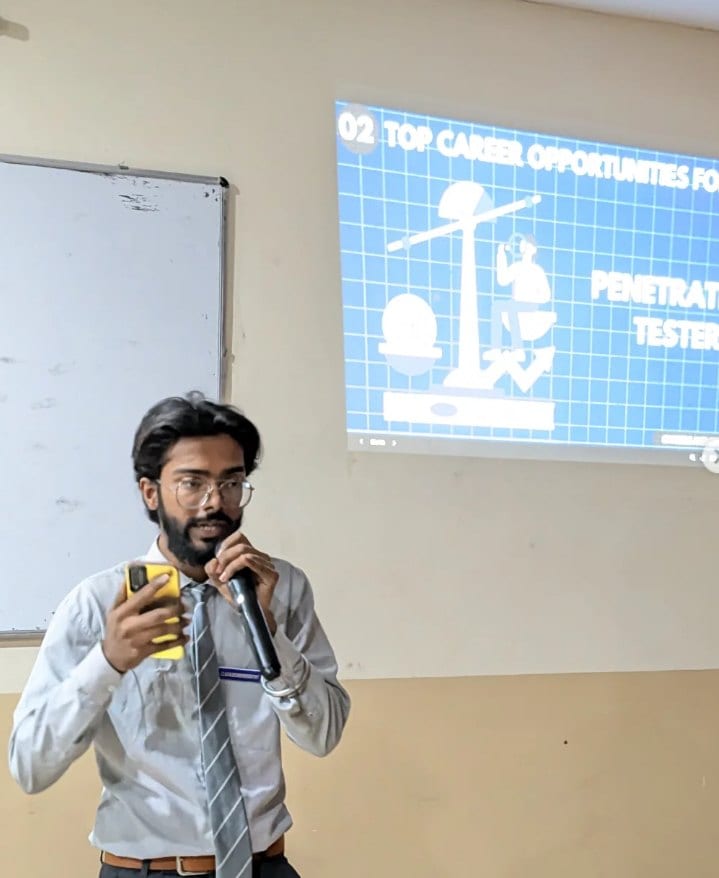
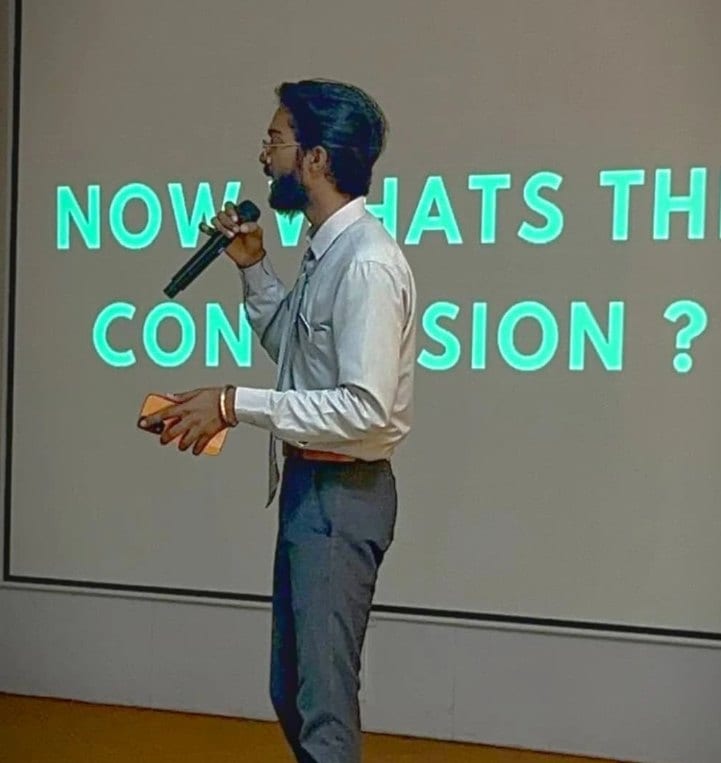
Sessions where this advice gets given in person.
Read next
What goes on the résumé and what comes after it.
A résumé that gets read?
I review student résumés against real job descriptions and help build the projects that fill them.