
The internship goes to the student with the project.
An AI internship is a few months inside a team building or using AI, and the way to get one is to arrive already able to build: one shipped project with a public write-up, a short list of companies that do work like it, and direct, specific outreach. Portals help; a demo link and a clear message help more. I have mentored students through this and seen what works.
- Proof
- One shipped project with a live link
- Channels
- Direct outreach, referrals, portals, hackathons
- Duration
- Usually two to six months
- Worth it when
- You ship something real and learn from a team

- 200+students mentored
- 20+campus sessions
- 5production AI apps
Questions students ask
The internship questions searched most, answered from mentoring students who got them.
What is AI internship?
An AI internship is a fixed-term role, typically two to six months, in which a student or recent graduate works on a team that builds or applies AI: an AI product startup, a company adding AI features, a consultancy delivering AI projects, a research lab, or an agency. The work ranges from building retrieval pipelines and evaluation sets to labelling data, testing models, writing documentation and shipping features. Good internships give you a mentor, a real deliverable and feedback; weak ones give you busywork. The title covers both, so ask what you would actually build before accepting.
What does AI intern do?
- Builds a piece of a product: a retrieval feature, an extraction pipeline, a chatbot integration, an evaluation harness.
- Prepares and cleans data; labels examples; writes test sets.
- Runs experiments: compares prompts, models or chunking strategies and reports results with numbers.
- Writes documentation, demos and internal tools.
- In research-leaning roles, reproduces papers and runs training experiments.
- Attends reviews, learns the team's code and habits, and ships something by the end that they can point to.
What is AI ML internship?
An AI/ML internship is the broader label covering both generative AI work (language models, retrieval, agents) and classical machine learning work (predictive models on tabular data, computer vision, forecasting). The listing usually tells you which: mentions of LLMs, RAG, prompts and agents mean generative work; mentions of scikit-learn, feature engineering, model training and MLOps mean classical work. Both are valuable; pick by what you have built. A student with a shipped RAG project should target generative roles; one with Kaggle experience and a trained model should target ML roles, and either can learn the other on the job.
What is generative AI internship?
A generative AI internship focuses on products built on language, image or multimodal models: building and evaluating assistants, document pipelines, content tools and agents. You will work with model APIs, prompts, retrieval, structured output, evaluation sets and sometimes fine-tuning, inside a software team. It is the most common kind of AI internship in 2026 because it is where most new product work is. To qualify, show one grounded project with citations and a test set; that single artefact answers most of the interviewer's questions about whether you can do the work.
What is AI annotation internship?
An annotation internship involves labelling data for training or evaluating models: marking entities in text, drawing boxes on images, rating model responses, transcribing audio, or grading outputs against a rubric. It is real and necessary work, it teaches you what data quality means, and it is often the entry point at data-focused companies. It is also repetitive and teaches little engineering. Take it if it is your first exposure or it is at a company you want to move within, and use the time to learn the pipeline the data feeds; move towards building roles as soon as a project of your own makes that possible.
How to get AI internship
- Build and ship one project that resembles the work: a grounded assistant, a document pipeline, a vision app. Live link, public code, a short write-up including what failed.
- Make a list of twenty companies doing that kind of work, from job boards, startup directories, hackathon sponsors and the teams behind tools you use.
- Write a short, specific message to a person at each: what you built, one sentence on why their product interests you, the link, and the ask.
- Apply through portals too, with a résumé that leads with the project, but do not rely on portals alone.
- Go to hackathons and community events where companies meet students; I have judged more than ten and watched internships come out of them.
- Prepare for the interview: explain your project's design decisions and trade-offs, and be ready to code a small retrieval or API task live.
How to find AI internships
Look where the work is rather than where the listings are. Startup job pages and directories; the careers pages of AI product companies and consultancies; LinkedIn and internship platforms filtered for LLM, RAG, generative AI and computer vision; college placement cells and alumni; the sponsors and judges at hackathons; open-source projects whose maintainers work at companies; and the people posting technical content about AI work, who are reachable with a thoughtful message. Keep a tracker of companies, contacts and dates. A referral from someone who has seen your project converts far better than a cold application, so build the project first and show it often.
Is AI internship worth it?
Worth it when you will build something real under people better than you, and when it ends with a deliverable you can describe and a reference who can vouch for you. Not worth much when it is unpaid busywork with no mentor, or a certificate mill that charges you a fee. Ask before accepting: what will I ship, who will review my work, and what did the last intern do? An internship is the fastest route into the field for most students, because it converts a portfolio into experience and a network. Two good internships before graduation make the first job search a very different experience.
What is the duration of internship?
Most AI internships run two to six months: summer internships of eight to twelve weeks, semester-long roles alongside study, and six-month roles in the final year that often convert into full-time offers. Shorter than six weeks is rarely enough to ship anything meaningful; longer than six months without a conversion offer is a job without the title. Part-time arrangements during term are common at startups and suit students who can commit a fixed number of hours a week. Whatever the length, agree the deliverable and the review cadence at the start so the time produces something you can show.
AI intern salary
Stipends range from nothing, at some small companies and research labs, to meaningful monthly pay at funded startups and large companies, with product companies and international remote roles at the higher end; figures change yearly and vary by city, so check current listings and student forums for your target companies. Judge an internship by learning and the deliverable first and pay second, but be wary of unpaid roles that are really free labour with no mentorship, and refuse any internship that asks you to pay. A strong project gives you the leverage to ask for a stipend; most companies that value the work will pay for it.
Six weeks to an offer
The plan I give students who ask in a hurry.
- 01
Weeks 1 to 3: the project
A grounded assistant or document pipeline; deployed; write-up with a screenshot and what failed.
- 02
Week 4: the list
Twenty companies doing similar work; one named person at each.
- 03
Week 5: outreach
Specific messages with the link; portal applications in parallel; a hackathon if one is near.
- 04
Week 6: interviews
Explain the design; code a small task live; ask what you would ship.
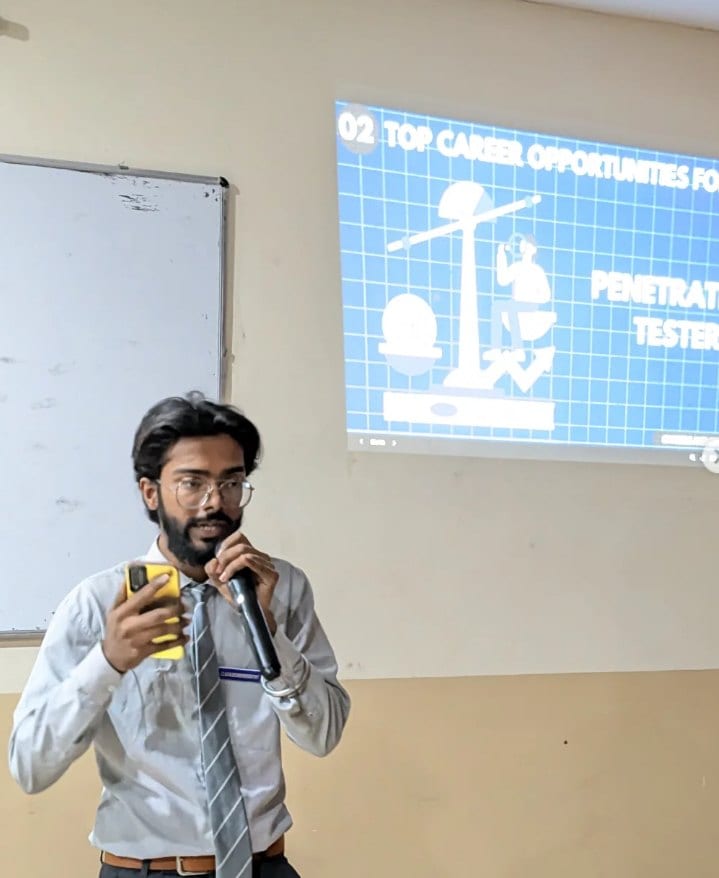
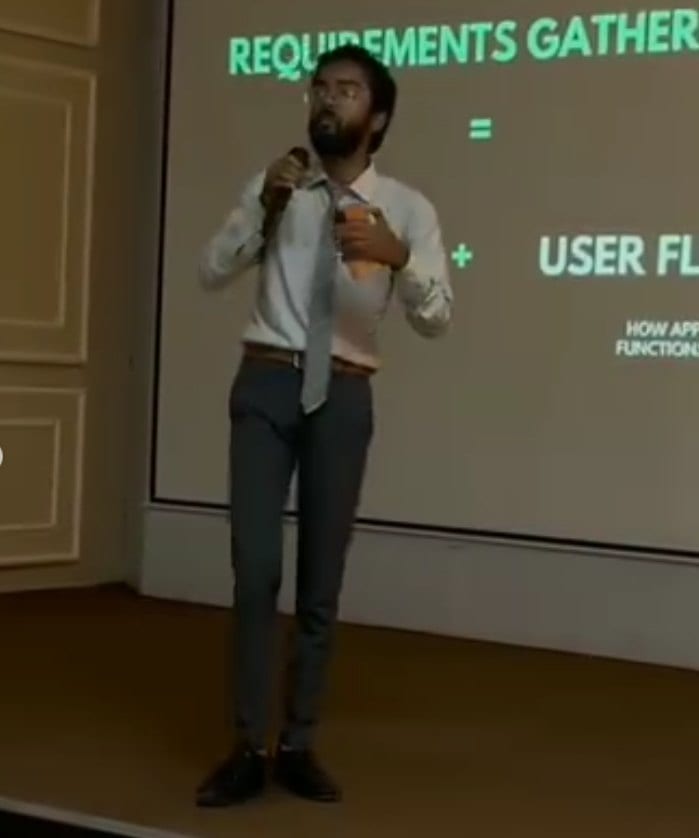
With students
Sessions where this advice gets given in person.
Read next
The portfolio, the résumé and the interview.
Applying and hearing nothing back?
Usually the project is missing or hidden. I help students build and present the one that gets replies.