
Python is where AI happens.
Python is the default language of AI because the model libraries, the provider SDKs, the data tools and the research code are all written in it, and because it is quick to read and write. You do not need to master the whole language: core syntax, data structures, functions, files and APIs get you building, and the AI libraries teach you the rest as you use them.
- Why Python
- Libraries, readability, community, glue
- Learn first
- Syntax, lists and dicts, functions, files, requests
- Then
- NumPy, pandas, an SDK, FastAPI, PyTorch
- Not required
- Every feature of the language

- 200+students mentored
- 20+campus sessions
- 5production AI apps
Questions students ask
The Python-for-AI questions searched most, answered from writing it daily.
Why Python for AI?
Because the ecosystem is there. PyTorch, TensorFlow and JAX for training; Transformers, PEFT and TRL for working with open models; the official SDKs of every model provider; NumPy, pandas and scikit-learn for data; OpenCV and MediaPipe for vision; FastAPI for serving; LangChain and LlamaIndex for composition. Research code is published in Python, so new methods are usable immediately. The language itself is readable enough that a scientist, a student and an engineer can share code, and it glues fast compiled libraries together so the slowness of the interpreter rarely matters. Choosing another language for AI means translating everything yourself.
Why is Python popular for AI?
A chain of history and fit. Scientific Python (NumPy, SciPy) made numerical work convenient in the 2000s; machine learning libraries built on it; deep learning frameworks chose Python as their interface because researchers already used it; the community and tutorials grew around it; and each new wave, from image classifiers to language models, arrived in Python first. Its syntax reads like pseudocode, which suits exploratory work in notebooks. The heavy computation runs in C, C++ and CUDA underneath, so Python's own speed is not the bottleneck. Popularity compounds: the more people use it, the more libraries and answers exist, the more people use it.
Is Python needed for AI?
For building AI products, almost always, because the tools assume it. JavaScript and TypeScript are a strong second: provider SDKs, the Vercel AI SDK and browser inference libraries make web-based AI apps possible without Python, and this site's front end is one. Other languages are used in production serving and infrastructure (Rust, Go, C++), and in enterprise contexts (Java). But training, fine-tuning, data preparation, evaluation and most research tooling live in Python, and an AI engineer who cannot read and write it is cut off from the majority of the field. Learn Python first; add TypeScript for interfaces when you need them.
What is Python AI developer?
A Python AI developer builds AI applications and pipelines in Python: integrating model APIs, building retrieval systems, processing documents and images, training or fine-tuning models, writing evaluation harnesses and serving the result through FastAPI or similar. It is the same role as an AI engineer described from the language side; job listings use the phrase to signal that Python fluency is required. The work needs the Python skills of an ordinary backend developer, packaging, testing, async, APIs, plus comfort with the data and model libraries. Most of the projects described on this site are Python at the core with a web interface on top.
How to master Python for AI
- Core language until it is automatic: variables, lists, dictionaries, loops, functions, classes, exceptions, files, virtual environments, pip.
- Working with data: NumPy arrays, pandas DataFrames, reading JSON and CSV, basic plotting.
- Working with APIs: requests, a provider SDK, environment variables for keys, handling errors and retries.
- Building services: FastAPI, async basics, Pydantic models, streaming responses.
- Model libraries as projects need them: sentence-transformers, Transformers, PEFT, PyTorch, OpenCV.
- Engineering habits: tests with pytest, type hints, formatting, a project layout, Git. The guide on structuring an LLM project in Python shows a layout that works.
How to learn machine learning in Python
Take one hands-on course that uses scikit-learn, and reproduce every example on your own data. Learn the workflow rather than the algorithms first: load and clean data with pandas, split into train and test, fit a model, evaluate with the right metric, inspect errors, iterate. Then PyTorch: build a small neural network by hand, watch the loss fall, overfit it on purpose and fix it. Then a pretrained model fine-tuned on your images or text. Kaggle notebooks are a good source of worked examples. At every step, write the code yourself rather than copying; the typing is where the understanding forms.
How to image processing in Python
Install OpenCV and Pillow. Load an image as a NumPy array, inspect its shape, convert colour spaces (remembering OpenCV's BGR order), resize, crop by slicing, blur, detect edges, threshold and find contours; draw results and save. For batch work, loop over a folder with pathlib. For anything that needs understanding rather than processing, classification, detection, OCR, faces, hand the preprocessed array to a model: a pretrained classifier through PyTorch or ONNX Runtime, a YOLO detector, an OCR engine, or MediaPipe for faces and hands. The computer vision and OpenCV pages on this site walk through each of those.
What is Tesseract in Python?
Tesseract is the open-source OCR engine, and pytesseract is the Python wrapper that calls it: install the Tesseract binary on your system, install the wrapper with pip, and call it on an image to get the recognised text, optionally with word boxes and confidences, in your chosen language. It performs well on clean printed scans and poorly on photos and complex layouts unless you preprocess with OpenCV first. For harder documents, PaddleOCR or EasyOCR are stronger deep-learning alternatives with pip installs. The OCR page on this site explains when to use which and how to validate the output.
What is function calling in Python?
Two meanings students mix up. In plain Python, calling a function is invoking it with arguments to run its code and get a result; the basics of defining and calling functions are the first thing to learn. In AI, function calling (tool calling) is the feature of model APIs where the model asks your program to run a function: you describe your Python functions with names, docstrings and typed parameters, the SDK turns them into a schema, the model returns a call with arguments, and your code executes it and returns the result. Clean Python functions with type hints and docstrings are therefore the raw material of AI tools.
What is Python Airflow?
Apache Airflow is a Python platform for scheduling and monitoring workflows: you define a pipeline as a graph of tasks in Python code, set a schedule, and Airflow runs the tasks in order, retries failures and shows progress in a web interface. In AI projects it is used for the indexing side: fetching new documents nightly, chunking and embedding them, refreshing indexes, running evaluation sets and reporting. It is heavier than a cron job and lighter than a full data platform; for a student project a scheduled script is enough, and Airflow becomes worth it when several dependent pipelines need reliability and visibility.
Python for AI in eight weeks
Enough to build the first project on this site's roadmap.
- 01
Weeks 1 to 2
Core syntax, data structures, functions, files; small daily scripts.
- 02
Weeks 3 to 4
APIs with requests and a provider SDK; JSON; environment variables; a first model call.
- 03
Weeks 5 to 6
pandas and NumPy; a FastAPI service with one endpoint; tests.
- 04
Weeks 7 to 8
A retrieval project: chunk, embed, store, search, answer with citations; deployed.
With students
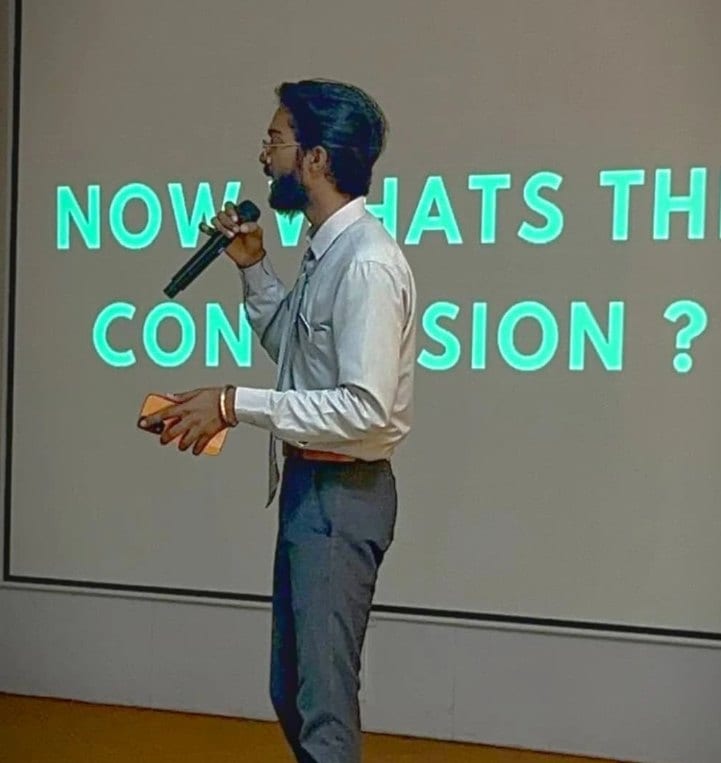
Sessions where this advice gets given in person.

Learning Python with a goal?
I mentor students from first script to first deployed AI project, in the order that works.