
The degree opens doors. Projects walk you through.
BTech is the engineering degree with the widest recruiter acceptance; BCA is a shorter, cheaper computing degree with more time to build; MCA is the master's that upgrades either. All three lead to AI engineering roles when paired with shipped projects, and none does without them. I did a BCA and became a GenAI engineer; the path ran through building, not through the degree's name.
- BTech
- Four years; engineering; widest campus recruitment
- BCA
- Three years; computing applications; lower cost and entry barrier
- MCA
- Two-year master's; deepens either; entrance exams such as NIMCET
- Decides outcome
- What you build during it

- 200+students mentored
- 20+campus sessions
- 5production AI apps
Questions students ask
The BCA, BTech and MCA questions searched most, answered from inside one of them.
What does BCA stand for?
Bachelor of Computer Applications, a three-year undergraduate degree (four at some universities under the newer framework) focused on programming, software development, databases, networking, web technologies and, increasingly, data science and AI electives. It is offered by universities and colleges across India and admits students from most streams, with mathematics requirements varying by institution. It is classed as a science or applications degree rather than an engineering degree, which matters for a few recruiter filters and exams and for nothing else once you have work to show. The abbreviation also names an unrelated protein assay in biochemistry, which confuses search results.
What is BCA degree?
A BCA is a professional degree that teaches you to build software: core programming in one or more languages, data structures and algorithms, databases, operating systems, computer networks, web development, software engineering practices, and a final-year project, with electives in areas such as AI, data science, cloud and security depending on the college. It is lighter on mathematics, physics and hardware than an engineering degree and heavier on applied computing, which suits students who want to build applications. Its quality varies widely by institution; the student's own projects fill whatever the syllabus lacks, as mine did.
BCA vs BTech which is better?
For most students, BTech in computer science is the safer choice if you can get into a good college: four years, deeper theory, and the broadest recruiter acceptance, including companies that filter for engineering degrees. BCA is better when cost, duration or entry requirements make BTech impractical, when you learn best by building, or when the available BTech colleges are weak and the BCA programme is strong. The quality of the specific college matters more than the degree label, and your projects matter more than either. If you choose BCA, plan from day one to out-build the engineering graduates, because you can.
Is BCA better than BTech?
Not in general, and not worse in the ways people fear. BTech wins on recruiter filters, theoretical depth, and eligibility for some exams and roles. BCA wins on time, cost, flexibility and, at many colleges, on practical exposure. The outcome for an individual depends almost entirely on what they did with the years: a BCA graduate with three shipped AI projects, hackathon results and an internship is hired ahead of a BTech graduate with none, at the same companies. I have watched both happen. Choose the degree you can do well and afford, then make the portfolio the deciding factor.
Why BCA is not good
- Some recruiters and campus drives filter for engineering degrees, which closes a few doors by default.
- Mathematics and theory are lighter, which you must make up yourself for machine learning depth.
- Programme quality varies more between colleges than for BTech; a weak BCA teaches little.
- Many students treat it as an easy degree and leave with no projects, which is the real reason outcomes disappoint.
- Each of these is fixable by the student: build, learn the maths you need, apply off-campus with a portfolio. The degree is a floor, not a ceiling.
Does BCA have scope in future?
Yes, because software and AI work keeps growing and the degree is a reasonable foundation for it, with the usual condition: the scope belongs to graduates who can build. Roles open to BCA graduates include software development, web and mobile development, data analysis, AI engineering, cloud and DevOps, testing and quality, product and technical roles at startups, and higher study through MCA or a master's abroad. The future is less kind to anyone, from any degree, who graduates without demonstrable skills, because AI tools have raised the bar for entry-level work. A BCA plus a portfolio is well placed; a BCA alone is not.
Which BCA specialization is best?
AI and machine learning, data science and cloud computing specialisations align with the strongest demand, with cybersecurity close behind. The label matters less than two things: whether the college actually teaches the specialisation with projects and current tools, and whether you build beyond the syllabus. A general BCA with a strong portfolio of AI projects beats an AI-specialisation BCA with only coursework. If your college's specialisation is thin, treat the free resources on this site and elsewhere as the real curriculum, and use the elective credits for whatever gives you the most project time.
Can BCA student give GATE exam?
Eligibility for GATE has been broadened in recent years to include candidates in the third year or later of a bachelor's degree in science and computer applications, so BCA students and graduates can generally appear for the computer science paper; confirm the current year's eligibility notice, since rules are revised. Scoring well opens MTech admissions at engineering institutes and some public-sector roles, which is one route for a BCA graduate into deeper study. It demands serious preparation in theory the BCA syllabus covers lightly: algorithms, discrete mathematics, operating systems, networks, databases and computer architecture.
Can BCA student apply for TCS NQT?
Yes; the large IT services companies' national qualifier tests have generally been open to BCA, BSc and MCA graduates alongside engineering graduates, with criteria on marks, gaps and graduation year that change each cycle, so read the current notification. These tests lead to entry-level roles at the lower end of the pay range, which are a reasonable start and a weak ceiling. A BCA student with projects should apply to them as a floor and simultaneously target product companies and startups off-campus, where the portfolio counts and the pay is higher.
What is NIMCET exam for MCA?
NIMCET is the national entrance test for MCA admission to the National Institutes of Technology, conducted by one of them each year on behalf of the group. It tests mathematics, analytical ability and logical reasoning, computer awareness and English, with mathematics carrying the most weight, and ranks candidates for counselling across participating institutes. Eligibility requires a bachelor's degree with mathematics at the specified level, which is why the maths question matters for BCA students planning an MCA. Other MCA entrances exist at state and university level; the institutes reachable through NIMCET have strong placements and are a solid upgrade path.
Make any of them work
The plan that produced a GenAI engineer from a BCA.
- 01
Year one
Python daily; a first deployed project; a campus community joined or started.
- 02
Year two
A grounded AI assistant with citations; a hackathon; an internship application with the project.
- 03
Year three
A document or vision project; open-source contributions; a talk; a final year project that is a portfolio piece.
- 04
Beyond
Apply off-campus with the portfolio; consider MCA or GATE only if it serves a specific goal.
With students
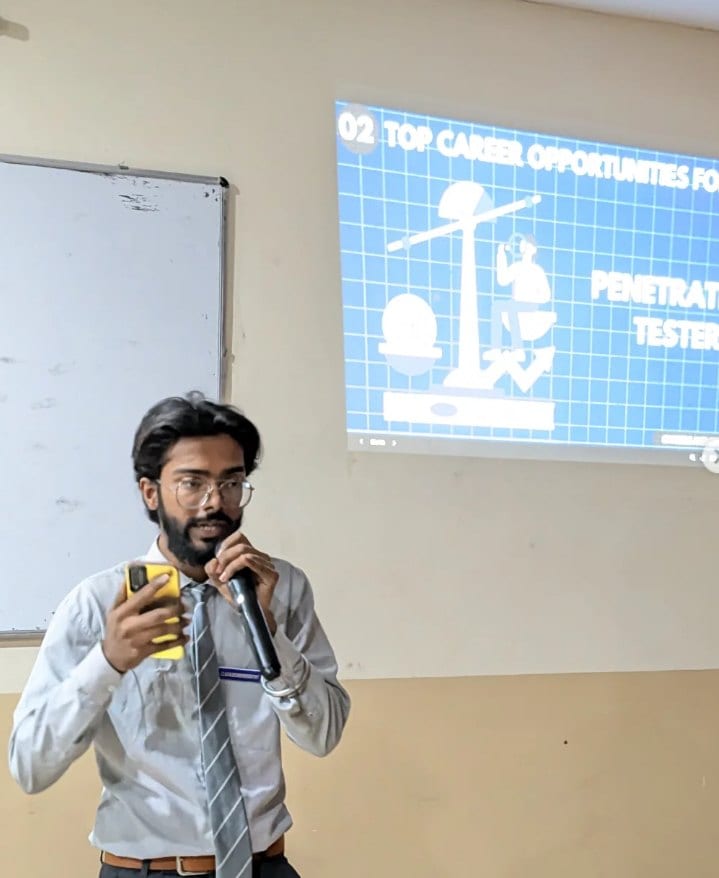
Sessions where this advice gets given in person.

Choosing a degree or stuck in one?
I mentor students from every programme into AI work; the plan adapts, the building does not.