
You need some maths. Less than you fear, more than none.
To build on AI models, retrieval, prompts, agents, evaluation, you need arithmetic, basic statistics and the idea of a vector, and you learn them as you go. To train and research models you need linear algebra, calculus and probability at a working level. BCA and MCA entry rules on mathematics vary by university; most want some maths, and bridge options exist.
- Building on models
- School maths plus vectors and basic statistics
- Training models
- Linear algebra, calculus, probability
- BCA entry
- Varies; many accept any stream, some want maths
- MCA entry
- Usually maths at 12th or graduation level

- 200+students mentored
- 20+campus sessions
- 5production AI apps
Questions students ask
The maths and eligibility questions searched most, answered without discouraging anyone.
Can you learn AI without math?
You can learn to build useful AI applications with the maths you already have. Calling a model, chunking documents, retrieving by similarity, writing prompts, validating outputs, measuring accuracy on a test set: none of this needs calculus. You will meet a few concepts, a vector as a list of numbers, cosine similarity as a measure of closeness, percentages as metrics, and you can learn each in an afternoon when a project needs it. What you cannot do without more maths is understand training deeply, design new models or read research papers in full. Start building; let the projects tell you which maths to learn next.
Does learning AI require maths?
It depends on which AI you mean. Applied AI engineering, the work described across this site, requires comfort with numbers, basic statistics (means, distributions, what a confidence interval roughly says), and enough linear algebra to know what an embedding and a similarity score are. Machine learning engineering and research require real linear algebra (matrices, transformations), calculus (gradients, which is how training works), and probability (distributions, likelihood, Bayes). The honest ladder: build first with little maths, then learn the maths that unlocks the next thing you want to do. Many strong engineers learned it in that order, including me.
Can you learn machine learning without math?
You can use machine learning without much maths: scikit-learn and the deep learning libraries let you train and evaluate models from examples with high-level code, and many practitioners work that way productively. You cannot understand why a model behaves as it does, tune it beyond trial and error, or recognise when a result is statistically meaningless without the fundamentals. The practical path: take one hands-on course, train a few models, then learn linear algebra, calculus and probability with that experience as motivation. Maths learned after you have seen gradient descent run is far easier than maths learned in the abstract.
Do AI engineers need math?
- Arithmetic and percentages: cost per token, recall at k, latency budgets, every day.
- Basic statistics: averages hide distributions; sample sizes; what a difference of two points on a hundred items means.
- Vectors and similarity: embeddings, cosine similarity, the geometry behind retrieval.
- Probability at an intuitive level: models sample; temperature; confidence scores.
- Logarithms occasionally: loss values, perplexity, scaling.
- Not needed daily: calculus and matrix algebra, until you fine-tune seriously or train models, at which point a few weeks of focused study suffices.
Can I become AI engineer without maths?
Yes, if 'without maths' means without having taken mathematics at the 12th standard or in college. I have mentored students from commerce and arts backgrounds who became capable AI builders by learning the handful of concepts applied work needs, as they needed them. The gap closes fastest when you build: a retrieval system teaches you vectors; an evaluation set teaches you statistics; a fine-tune teaches you loss curves. Treat the missing school maths as a known gap, not a verdict. If you later want to go deeper into model training, you will study linear algebra and calculus then, with a reason, which is the best way to learn them.
Does BCA require maths?
Eligibility differs by university. Many Indian universities admit BCA students from any stream at 12th standard, sometimes with a requirement of English and a minimum percentage; others require mathematics or computer science as a subject at 12th; and a few run entrance tests. Under the national education framework changes, several universities have broadened eligibility and added bridge courses in mathematics for those who lacked it. Check the specific university's current prospectus rather than general advice. Once admitted, the BCA curriculum itself includes mathematics courses (discrete maths, statistics), which you will pass with steady work whatever your stream.
Is maths compulsory for BCA?
Not universally. It is compulsory at some universities as an entry requirement and optional at many others, which accept students from commerce and arts streams. Where it is not required for entry, the programme still teaches the mathematics it needs. If you lack 12th-standard maths and want to do a BCA, shortlist universities that admit any stream, confirm from the current admission notice, and plan to put extra effort into the first-year mathematics courses. The guide on BCA versus BTech for an AI career covers how the degree choice interacts with an AI ambition; the short version is that the projects you build matter more than the entry rule.
Can I do BCA without maths in 12?
At many universities, yes: they admit students who did not take mathematics in 12th standard, often from commerce or arts, sometimes with a condition such as a bridge course or a slightly higher minimum percentage. At others, no: mathematics or computer science at 12th is a stated requirement. The only reliable source is the admission notice of the university you are applying to for the current year, because rules have been changing. If your preferred university requires maths, alternatives include a university that does not, or completing a recognised mathematics qualification before applying. Either way, start learning programming now; it is the skill the degree is for.
Does MCA require maths?
Usually, yes, at some level. The regulatory norms for MCA admission in India generally require mathematics as a subject at the 12th standard or at the graduation level, and universities apply that in different ways: some require it at 12th, some accept a mathematics or statistics course in the bachelor's degree, and some admit candidates from BCA or science degrees on the strength of the degree's own mathematics content. Entrance exams typically include a mathematics section. Check the current eligibility published by the university and the national regulator, since the wording has been revised more than once in recent years.
Can I do MCA without maths in 12th?
Often, if you studied mathematics at the graduation level instead. Many universities accept a bachelor's degree with a mathematics or statistics course (a BCA, a B.Sc. with maths, or a B.Com. with business mathematics, depending on the institution) in place of 12th-standard maths, and some offer a bridge course for those who lack both. A few are strict about 12th-standard maths. Confirm with the specific university's current notice. If MCA is your route into AI, the mathematics you meet in the programme is manageable with steady study, and the projects you build alongside it will matter more to employers than the entry criteria ever did.
The maths you actually need, in order
Learn each when a project calls for it.
- 01
Now
Percentages, averages, basic statistics; what a vector and cosine similarity are. An afternoon each.
- 02
After your first project
Distributions and sample sizes, so your evaluation numbers mean something.
- 03
Before fine-tuning seriously
Gradients and loss at an intuitive level; a short course on calculus for machine learning.
- 04
If you go towards training or research
Linear algebra, calculus and probability properly, over a few months with a good course.
With students
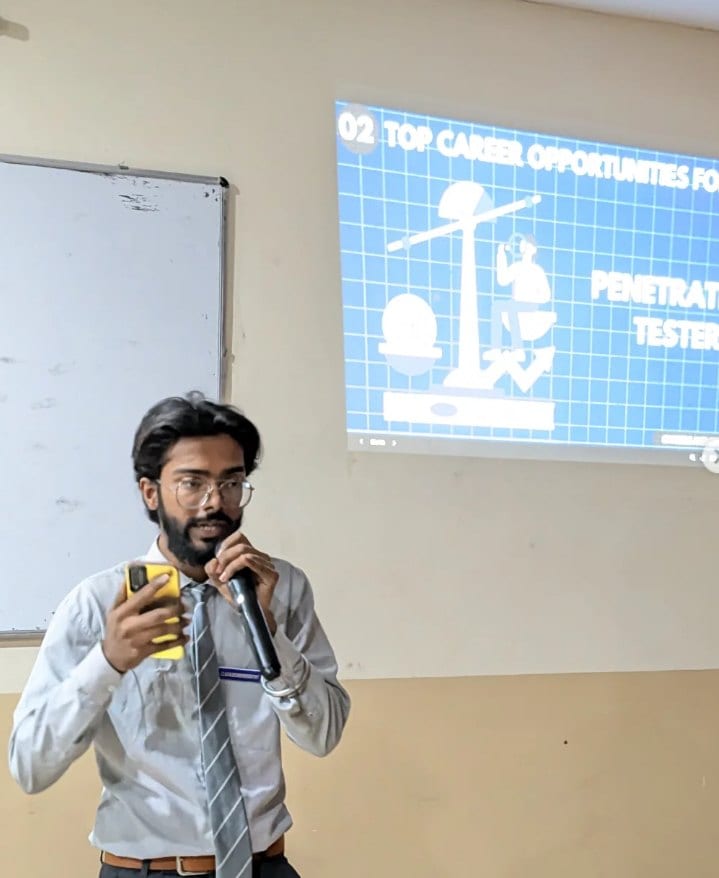
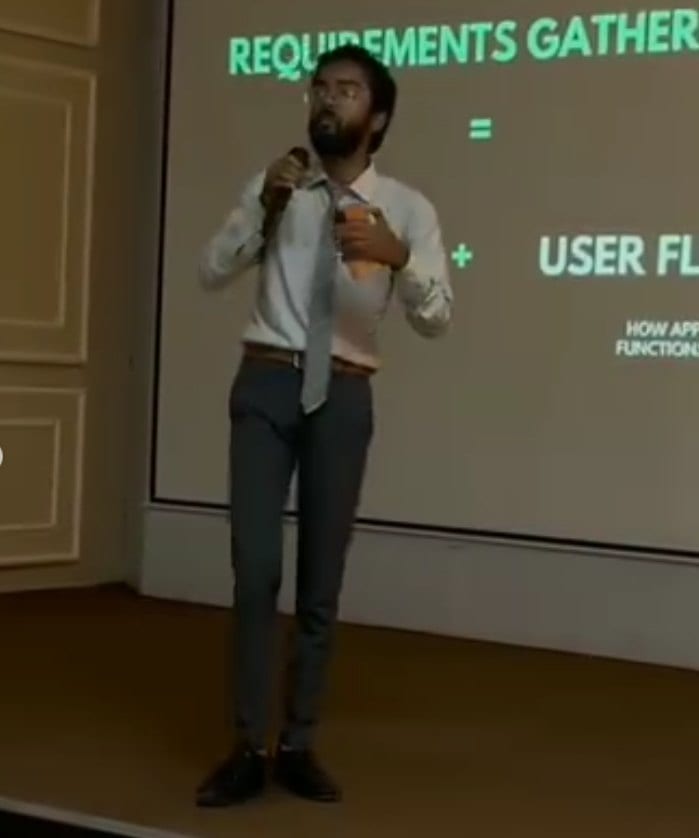
Sessions where this advice gets given in person.
Read next
The paths that start from where you are.
Worried the maths will stop you?
It has not stopped the students I mentor from commerce and arts backgrounds. Start building; I will show you what to learn when.