
Your first hackathon is for finishing, not winning.
A beginner's first hackathon has one goal: finish a working part of a working demo with a team, and learn what shipping feels like. You need basic coding skills, a prepared laptop, a role you can own and the humility to cut scope. Everything else, teammates, mentors, ideas, the event provides. Winning comes at the third or fourth event; the first is for the experience.
- Need
- Basic coding, a prepared laptop, one role, a team
- Goal
- A working part of a working demo
- Find events
- College clubs, online platforms, national programmes
- After
- Write it up; go again within three months

- 3first prizes
- 10+hackathons judged
- 200+students mentored
Questions students ask
The beginner questions searched most, answered from mentoring first-timers and judging them.
Is hackathon good for beginners?
Yes, with the right expectations. A hackathon compresses the whole cycle of building, scoping, coding, integrating, presenting, into a weekend, which teaches a beginner more about real software than a month of tutorials. Most events welcome first-timers, run beginner tracks and have mentors whose job is to unblock you. The experience can be overwhelming if you expect to win or try to build alone; it is excellent if you join a team, own a small part and finish it. The students I mentor who went to a hackathon in their first year were visibly ahead of those who waited.
How to prepare for your first hackathon
- Learn enough of one stack to build a small app: a page, a form, an API call, a database table; a weekend tutorial project is enough.
- Set up your laptop: editor, Git, a runtime, an account on the deploy platform, a model API key with a free tier.
- Practise the loop once: build a tiny project from a blank folder to a live link in an afternoon.
- Find a team before the event or plan to join one at the start; decide the role you will offer.
- Read the theme; sketch two problem ideas with a named user.
- Pack for the time box; plan sleep; bring chargers.
- Decide now that you will cut scope without arguing when the team leader asks.
How to prepare for hackathon for beginners
Beyond the checklist, prepare mentally for three moments. The first hour, when ideas are many and the team must choose one small enough; your job is to help narrow, not to add. The middle, when integration breaks and everyone is tired; your job is to keep your part working and ask for help early. The end, when the demo must run on stage; your job is to have tested your part with the real data and to know one thing to say if a judge asks about it. If you can do those three things, you have contributed more than many experienced participants do.
What to do in hackathon for beginners
Take a bounded role: the interface for one screen, the data loader, the demo data, the deployment, the pitch slides and the backup video. Finish it, then help where the team is stuck. Ask mentors questions; they are there for you and they remember curious teams. Keep a notes file of what you learned and what broke; it becomes your write-up. Watch other teams' demos at the end and note what the winners did. Collect contacts: teammates, mentors, sponsor engineers. And submit on time; many beginner teams lose everything by missing the deadline with a working project on their laptops.
How to join hackathon for beginners
Start with your college: the coding club, the technical society and the department usually run or know about events and are the easiest to enter. Online hackathon platforms list hundreds of events with filters for beginner-friendly ones, and many are open to anyone with an email address. National programmes such as Smart India Hackathon run through college selection rounds. Register as early as possible; popular events close. If you have no team, say so in the registration form or the event's community channel; organisers match people, and solo registrants are common.
How to participate in online hackathon
Register on the platform, join the event's chat server and read the rules, especially the submission format and the deadline in your time zone. Form or join a team in the platform's channels. Set up a shared repository and a video call that stays open while you work. Build as you would in person, with more explicit communication: written status updates, screen sharing for integration, a clear owner for the submission. Record the demo video early; online judging usually relies on it. Submit well before the deadline, then attend the live demo or judging call if there is one. Online events are the most beginner-friendly format because the field is large and the stakes are low.
How to register Smart India Hackathon
Registration runs through your college: the institute nominates a point of contact who registers the college on the official portal, the college conducts an internal hackathon to select teams, and the selected teams, six students with at least one female member and a faculty mentor, are registered with their chosen problem statements for the national rounds. Timelines, team rules and problem statements are published on the official Smart India Hackathon site each year and change between editions, so follow that site rather than secondary sources. The Smart India Hackathon guide on my answers site walks through the stages from internal selection to the grand finale.
How to prepare for AI hackathon
- Build one tiny AI project before the event: a script that calls a model with a system prompt, and a folder of documents it answers from with retrieval.
- Get API keys with free tiers (Gemini, Groq) and install Ollama for a local model; test both.
- Learn to ask a model for structured output and to validate it; that one skill makes AI demos reliable.
- Prepare twenty test inputs for whatever domain you expect; you will need them to show a number.
- Read what AI hackathon judges reward: a model that does needed work, grounded, checked, measured, with a stated limit.
- Pick a role that uses what you know; the model is one part of the project, not all of it.
Hackathon roadmap for beginners
Month one: learn one stack to the point of a deployed tiny app; attend a college event as a team member with a bounded role. Month two: write up what you built and learned; join a community; find a regular team. Month three: an online hackathon with that team, taking a bigger role; a project with one piece of real depth. Months four to six: a larger event or a national selection round; aim to place. Throughout: watch winners, keep the projects live, add each to your portfolio. By the fourth event, students who follow this are leading teams and placing; several of mine have.
How to improve coding skills for beginners
Build small things that work, every week, from a blank folder to something you can show: a script that solves a chore, a page that does one thing, an API call that returns data you use. Read other people's code in projects you use. Use an AI assistant to explain errors and to review your code, not to write all of it; ask it why, not only what. Learn Git properly, because every team project depends on it. Do one tutorial per new tool, then stop doing tutorials and build. Hackathons accelerate all of this because they force integration and finishing, the two skills beginners practise least. The learning pages on this site give a fuller order.
Two weeks to your first event
The minimum preparation that makes the weekend productive.
- 01
Week one
One stack tutorial; a tiny app deployed; laptop set up; register for the event.
- 02
Week two
Find or plan a team; choose your role; sketch two ideas; practise a one-minute explanation of a project.
- 03
The event
Own a bounded part; finish it; ask mentors; test with real data; submit early.
- 04
After
Write-up with what broke; keep the demo live; book the next event.
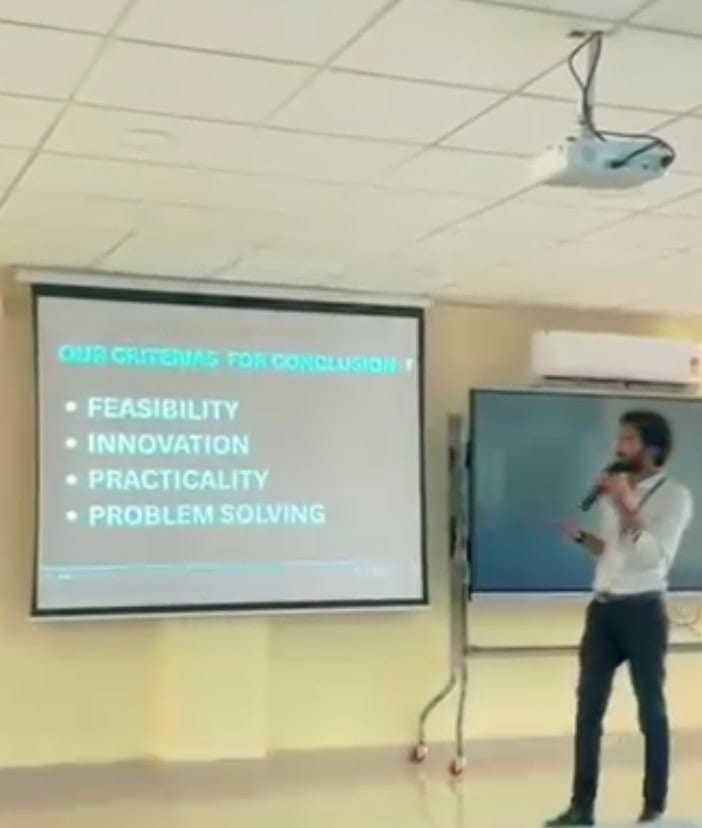
At the table
Judging, mentoring and the odd trophy.

Read next
The rest of the hackathon playbook.
Running a beginner hackathon and want mentors who unblock?
I mentor and judge beginner events with a focus on finishing, and I run a pre-event session on scoping.