
Courses teach. Projects prove.
Free AI courses from universities, model providers and the big platforms are excellent for learning, and most offer certificates. A certificate shows you finished; a shipped project shows you can build. Take one or two good courses, then spend the rest of your time building and writing it up. That is what I tell every student, and it is what employers told me.
- Best free courses
- University and provider courses with hands-on labs
- Certificates
- Nice to have; rarely decisive
- What hires
- Projects, write-ups, references
- My degree
- BCA, then building; now a GenAI engineer

- 200+students mentored
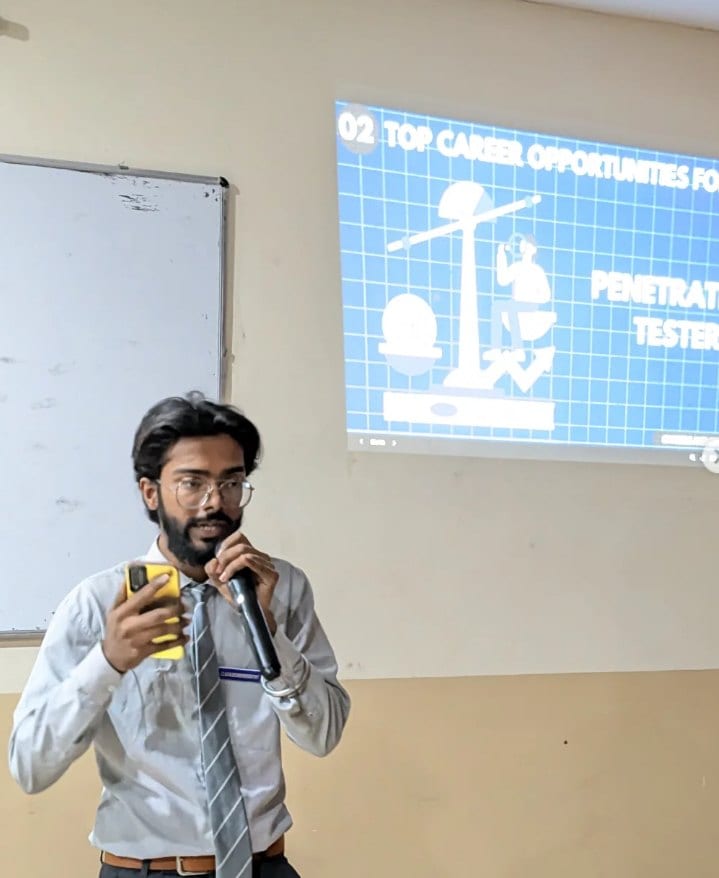
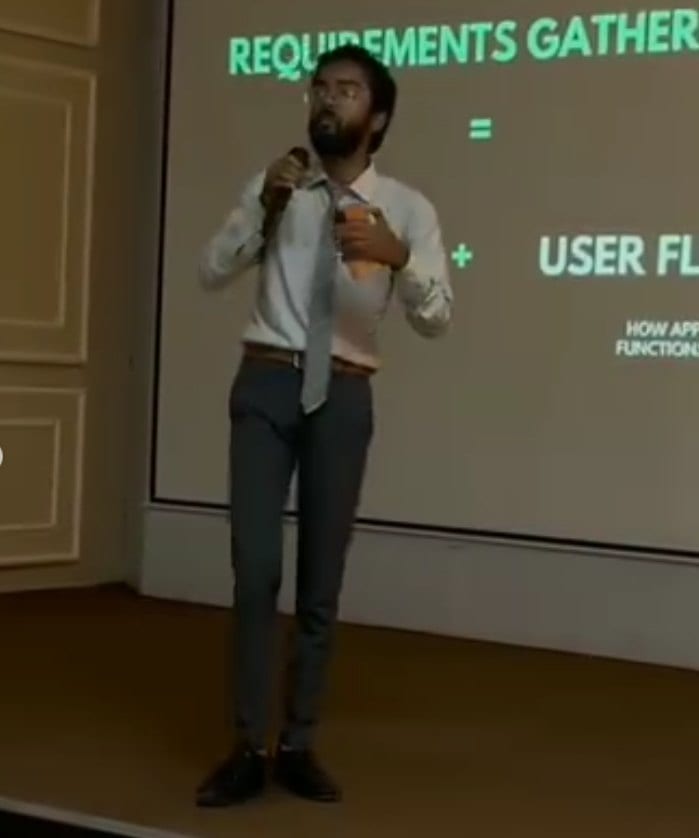
- 20+campus sessions
- 5production AI apps
Questions students ask
The course and certification questions searched most, answered honestly.
Best AI course free
- For fundamentals: the well-known university machine learning and deep learning courses available free online, with notebooks.
- For generative AI practice: the short, hands-on courses published by model providers and AI education platforms on prompting, retrieval, agents and fine-tuning.
- For Python: the official tutorial and a free introductory programming course.
- For hardware and training: the free courses from Hugging Face on transformers and fine-tuning.
- For building: provider documentation and quickstarts, which are more current than any course.
- Pick one per stage, finish it with the exercises, and build something immediately after. The guide on generative AI and where to learn it free lists specific links.
Free AI course with free certificate
Many providers issue a free certificate on completion: the large education platforms' audit tracks (sometimes with a paid upgrade for the certificate, sometimes free), company-run academies from cloud and AI vendors, and university open courses. Government and company-backed programmes in India also run free AI courses with certificates from time to time; check the official site for current offerings rather than social media posts. The certificate is a pleasant record; what you should optimise is the project you build with what you learned. If a course has no exercises and no project, its certificate means little to anyone who reads it.
Are AI certifications worth it?
Worth the time if the course teaches you something you then use; rarely worth money paid only for the credential. Hiring managers in AI engineering look at what you have built, how you explain it, and whether you can reason through a problem in an interview; a certification line on a résumé seldom changes that. Exceptions exist: cloud vendor certifications can matter for cloud-heavy roles, and some companies use them to filter at scale. My rule: take the course, keep the certificate, and put the project it led to above it on your résumé. Portfolio over certificates is a page on my answers site for exactly this reason.
Which AI certification is best?
The best one is the one attached to skills you will use. For building on models: provider and platform courses on retrieval, agents and evaluation, which are free and current. For cloud roles: the AI and machine learning certifications from the cloud vendor your target companies use. For data roles: the analytics and data engineering tracks. For research-leaning roles: no certificate substitutes for a strong course of study and published work. Avoid certifications that mainly test vocabulary. Whatever you choose, pair it with a project that demonstrates the skill, because the certificate opens no doors by itself.
Which AI certification is in demand?
Demand follows the platforms companies run on: the major cloud vendors' AI and machine learning credentials appear in job listings most often, followed by data engineering and analytics credentials, with generative-AI-specific certificates from large vendors rising. In practice job listings mention certifications far less than they mention skills: Python, retrieval, LLM APIs, evaluation, deployment, and a specific cloud. Read ten listings for the roles you want and count what they ask for; that is the demand signal. Then satisfy it with projects first and a certification second if the listings keep naming one.
How to get AI certification for free
Use the free tracks: audit a course on the large platforms and look for free certificate options, enrol in vendor academies that issue certificates at no cost, and watch for scholarship or promotional windows when paid certificates are waived. University open courses sometimes offer free statements of completion. For vendor exams that normally charge, student programmes and events periodically offer vouchers. Treat the hunt for free certificates as a minor side quest; the hours are better spent on the free course content itself and on the project that follows.
What is AI certification?
An AI certification is a credential issued by a company, platform or institution stating that you completed a course or passed an exam on a defined set of AI topics: fundamentals, machine learning, generative AI, a vendor's tools, or responsible AI. It ranges from a completion certificate for watching lectures to a proctored exam with a pass mark. It signals exposure and discipline; it does not by itself show you can build. Employers weigh it accordingly, more for vendor-platform roles and less for engineering roles, where a portfolio and interview performance dominate.
Best AI engineer course
There is no single best, and the courses that call themselves AI engineering vary from solid to superficial. Look for: hands-on labs with real code, coverage of retrieval, evaluation, tool use and deployment rather than only prompting, recent material (the field moves quarterly), and a capstone project you can publish. Free courses from model providers and from AI education platforms meet that bar; a few paid bootcamps do too, with mentoring as the main thing you pay for. Before paying, do the free courses and build two projects; you will then know exactly what you still lack and whether a paid course covers it.
Why BCA course
A Bachelor of Computer Applications gives three years focused on programming, databases, operating systems and software projects, with lower cost and entry barriers than most engineering programmes and more time to build. Its weakness is that some employers filter for engineering degrees and some programmes are shallow in mathematics and theory, which you must fill yourself. I did a BCA and became a GenAI engineer by treating the degree as scaffolding: the fundamentals came from the course, the career came from projects built alongside it from the first year. The guide comparing BCA and BTech for an AI career lays out the trade-offs.
How many years BCA course
In India a BCA is traditionally three years, six semesters, and under the newer national education framework some universities offer a four-year version with an honours or research year. Both include programming, data structures, databases, networking and web development, with elective tracks in AI, data science or cloud at many institutions. Three years is enough if you build throughout them; the fourth year is useful for a deeper specialisation or a research project. Whichever length, the degree sets the floor and your projects set the ceiling, which is the same advice I give for every programme.
Courses, in order
The minimum that supports real building.
- 01
Python
One free introductory course with exercises; daily scripts until it is comfortable.
- 02
Generative AI practice
A short hands-on course on retrieval and agents; build the capstone and deploy it.
- 03
Fundamentals
One machine learning course with notebooks; train and evaluate something yourself.
- 04
Specialise by building
Provider docs and projects over further courses; certificates only where listings ask.
With students
Sessions where this advice gets given in person.
Finished the courses and still not hired?
The missing piece is usually the portfolio. I help students build and present one that works.