
AI is open to every stream. Coding is a choice, not a wall.
You can use AI tools, build simple AI apps and automations without writing code, and you can enter AI from commerce, arts, mechanical or any other background. Becoming an AI engineer does eventually mean learning to code, and it is learnable at any age. I have mentored students from every stream into building with AI; the ones who started were the ones who finished.
- Without coding
- Use tools, no-code apps, automations, prompts
- With coding
- AI engineer roles; learnable from any stream
- Entry
- BCA and many AI programmes accept commerce and arts
- I mentor
- Students from every background; 200+ so far

- 200+students mentored
- 20+campus sessions
- 5production AI apps
Questions students ask
The no-code and non-CS questions searched most, answered without gatekeeping.
Can I learn AI without coding?
Yes, at the level of using it well, which is already valuable. You can learn what models do and where they fail, how to prompt precisely, how to ground an assistant in your own documents with tools that need no code, how to build automations in visual tools, and how to judge AI output critically. That makes you the person in any team who uses AI effectively, which employers in every field want. What you cannot do without code is build custom systems, evaluate them rigorously or work as an AI engineer. Many students start with the no-code layer, find they like it, and then learn Python with a reason.
Can you learn AI without coding?
The concepts, yes; the craft, partly. Understanding tokens, context windows, retrieval, hallucination, agents and evaluation needs no code and is explained in plain language across this site. Using AI in work, writing, research, analysis, design, customer service, needs no code. Building with no-code tools gets you working prototypes: a chatbot over your documents, a workflow that triages email, a form that extracts fields from receipts. The boundary is control and reliability: when you need the system to behave exactly, to be tested and to scale, code is how that is done, and at that point learning Python is the next step rather than the first.
Can I learn machine learning without coding?
You can learn what machine learning is and use tools that train models from spreadsheets with no code: automated machine learning services, no-code model builders and the model features inside analytics tools let you upload data, choose a target and get a trained predictor with evaluation metrics. That teaches the workflow, splitting, training, measuring, deploying, and is enough for many business uses. Going further, custom models, real evaluation, anything in production, means Python with scikit-learn and PyTorch. The no-code route is a legitimate start that shows you whether you want the coding route, and the concepts transfer directly.
Can I become AI engineer without coding?
No, and that is a smaller obstacle than it sounds. AI engineering is building software around models, and software is code. But the coding an AI engineer needs is learnable in months from zero by someone who practises daily, and AI coding assistants now make the early stage far gentler than it was. The honest framing: you cannot be an AI engineer without coding, and you can become someone who codes, whatever your stream. Several of the strongest builders I have mentored came from commerce and arts and started Python in their first year of college or later; the roadmap on this site is written for exactly that start.
Can I become AI engineer with commerce stream?
Yes. The stream you took at school does not fix your career; it affects which degrees admit you directly and how much mathematics you have to catch up on. Commerce students enter BCA at many universities, data and AI programmes at others, and can learn programming independently from any degree. The maths you need to build on AI models is modest and learnable; the maths for training models is more, and also learnable with a reason. Your commerce background becomes an asset the moment you build AI for finance, accounting, operations or business processes, where knowing the domain is half the job. The maths and BCA pages on this site cover the specifics.
Can I do AI engineering after 12th arts?
Yes, through a computing degree that admits arts students, such as a BCA at a university without a mathematics requirement, or through a degree in your own interest paired with self-taught programming and AI, which is how many people enter the field now. The direct engineering degrees generally require science at 12th, so the route is a computing or data programme or a non-traditional path with a strong portfolio. Arts students bring strengths the field is short of: writing, which is prompt design and documentation; research; design; understanding people, which is product sense. Learn Python, build with AI in a domain you care about, and the degree label will matter less each year.
How to build AI app without coding
- Use a no-code app builder with AI features, or an AI app generator that turns a description into a working app you can edit visually.
- Start with a chat assistant over your own documents using tools that let you upload files and publish a bot; many have free tiers.
- Use visual automation tools (n8n, Zapier, Make) with AI steps to classify, extract and draft inside workflows.
- Use form and spreadsheet tools with built-in AI to process entries.
- Combine them: a form collects a receipt, an automation extracts fields with a model, a sheet stores it, a message confirms it.
- Keep the rules of good AI apps even without code: ground it in your data, check outputs, give it a decline path, and test it with real examples.
How to build a RAG chatbot without coding
Several tools let you upload documents, which they chunk and index, and publish a chat assistant that answers from them with citations: the custom assistant builders inside the major chat products, dedicated knowledge-base chatbot services, and open-source apps with graphical interfaces that run a retrieval pipeline on a model you choose. Upload your documents, write the system instructions (answer only from the documents, cite them, say when they do not cover the question), test with twenty real questions, and adjust the documents and instructions where it fails. You will be running a real RAG pipeline; when you later learn code, you will already know what each stage does, which is the best preparation for building one yourself.
Can I build AI agent without coding?
Simple ones, yes. Visual automation tools now include agent nodes: give a model a goal, connect tools (your email, calendar, sheets, a web search, a database) and let it decide which to use, with limits you set. No-code agent builders from the major platforms do the same with a form interface. These are real agents and they handle real tasks, such as triaging messages into tasks with a confirmation step. What they lack is fine control, rigorous testing and custom tools, which is where coded agents take over. Build one visually to understand the loop; the security and limits advice on this site applies just as much to a no-code agent that can send email.
Will AI replace mechanical engineers?
Not the profession; parts of the work. AI is changing design, simulation, documentation and analysis in mechanical engineering, and engineers who use those tools do more with less. Physical judgement, safety responsibility, manufacturing reality, site work and accountability stay with people. The risk is to engineers who do only the routine, documentable parts; the opportunity is to engineers who combine their domain with AI skills, building tools for their own field, which is a wide-open space because few people have both. The same holds for civil, electrical and every applied discipline: learn enough AI to apply it to your domain, and you become more valuable, not replaceable.
A no-code start that leads somewhere
Three months from any stream.
- 01
Month one: use
An assistant daily on real tasks; learn prompting as specification; notice failures.
- 02
Month two: build without code
A document chatbot with citations; an automation with one AI step; test with real examples.
- 03
Month three: decide
If you enjoyed building, start Python with the roadmap on this site; if not, you are already the AI-fluent person in your field.
- 04
Either way
Apply AI to your own domain, commerce, arts, engineering, where knowing the field is the advantage.
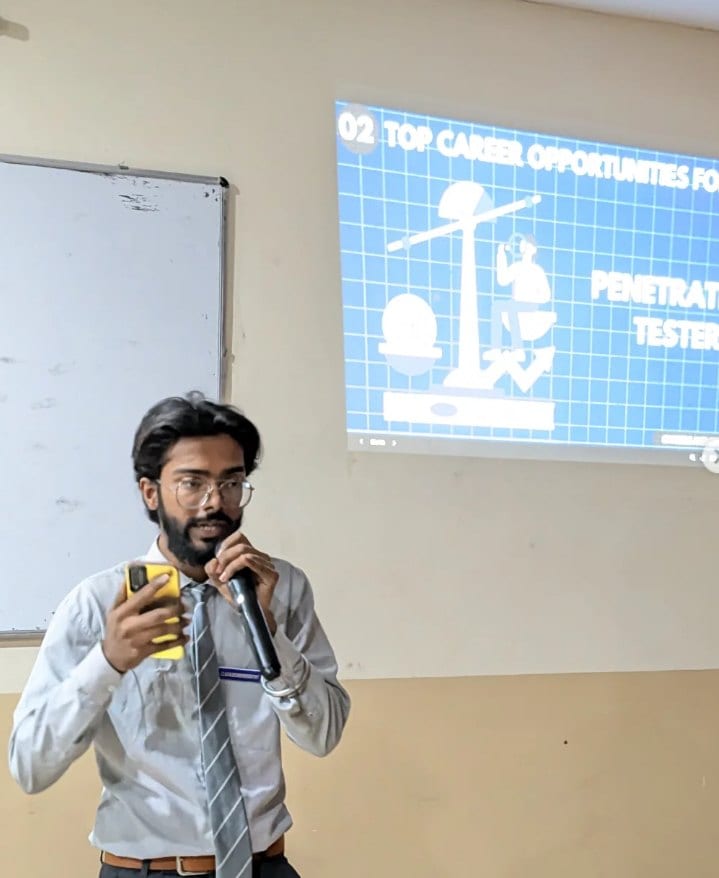
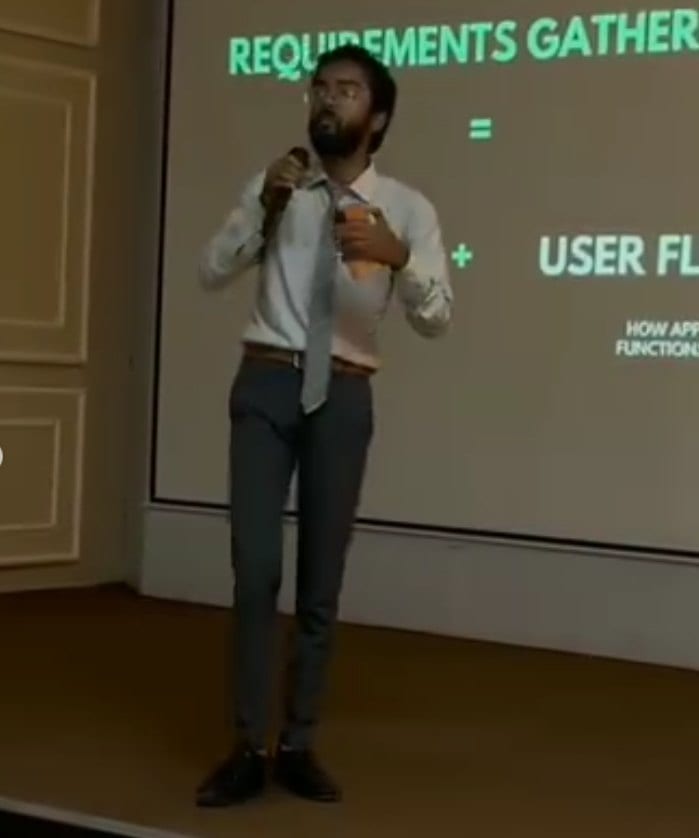
With students
Sessions where this advice gets given in person.
Not from CS and want in?
I mentor students from every stream into building with AI, starting from wherever they are.