
AI jobs go to people who can ship with AI.
AI jobs are not only research roles: they include AI engineers building products on models, data and ML engineers, product and operations roles that use AI tools, and every developer job that now expects AI fluency. Demand is strongest for people who can build grounded, evaluated systems. Many roles are remote, and a portfolio travels further than a degree.
- Roles
- AI engineer, ML engineer, data, product, applied research
- In demand
- RAG, evaluation, agents, deployment, domain knowledge
- Remote
- Common; won on visible work and communication
- Entry
- Portfolio, internships, referrals, off-campus applications

- 200+students mentored
- 20+campus sessions
- 5production AI apps
Questions students ask
The AI jobs questions searched most, answered from hiring conversations and mentoring.
What are AI jobs?
- AI or GenAI engineer: builds products on models; retrieval, prompts, tools, evaluation, deployment.
- Machine learning engineer: trains, evaluates and serves models on company data.
- Data scientist and analyst: analysis, predictive modelling, experimentation, reporting.
- AI product manager: decides what to build with models and whether it works.
- Applied research and research engineering: new methods, usually with advanced degrees.
- AI operations and evaluation: test sets, quality monitoring, annotation management, safety.
- Domain roles with AI: a lawyer, doctor, marketer or teacher who uses AI tools fluently, a growing category.
- Every software role: AI fluency is now expected in ordinary developer jobs.
Which AI jobs are in demand?
Reading hundreds of listings, the pattern in 2026 is consistent: companies want engineers who can take a model and make it reliable in a product, which means retrieval-augmented generation, structured outputs, evaluation sets, agents with limits, cost control and deployment. Those skills appear in listings far more often than model training. Machine learning engineering remains strong where companies have their own data. Data roles are steady. Prompt engineering as a standalone title has mostly disappeared into these roles. Demand also favours domain knowledge: AI for documents, healthcare, finance, education and legal work, where knowing the field is as valuable as knowing the model.
Best AI jobs for beginners
For a fresher, the most reachable AI roles are AI engineer or developer positions at startups and product companies building AI features, junior data roles, AI evaluation and operations roles, and internships that convert. Startups are the easiest entry because they hire on demonstrated ability and give one person the whole feature to build. Services companies offer volume but less depth. Research roles are the hardest for beginners and usually need a master's or published work. Whatever the first role, choose the one where you will ship something with a model in it; that experience compounds faster than a famous name on the résumé.
How to get AI jobs in India
- Build three shipped projects that mirror the work: a grounded assistant, a document pipeline, an agent or a fine-tune, each with a live link and a write-up.
- Put them on a portfolio site and a clean GitHub; lead your résumé with them.
- Apply off-campus to product companies and startups, not only through placement drives; message a person at each with the project link.
- Use internships and freelance projects as entry; they convert and they count as experience.
- Attend hackathons and communities where companies meet students; referrals convert far better than portals.
- Prepare for the interview rounds that matter: project deep-dive, practical coding, AI system design.
How to get remote AI jobs
Remote roles are won on visible work and communication. Make your portfolio and GitHub excellent, because a remote employer cannot meet you and will judge the work. Write clearly: project write-ups, a few public posts explaining what you learned, a well-written résumé; remote work is mostly writing. Target companies that are remote by design, startups abroad hiring in India, and contract platforms for AI work; search by skills rather than titles. Be available in the time zones the company works in and say so. Freelance AI projects are a proven route to the first remote role, because a client reference is the strongest evidence a remote employer can get.
Are AI jobs remote?
Many are, more than in most fields, because the work is code, data and conversations. Startups and international companies are the most likely to be remote or hybrid; large enterprises and teams handling sensitive data lean towards office presence; early-career roles are often hybrid because mentoring in person helps juniors. Remote widens the market for students outside the major hubs and for international pay, and it raises the bar on communication. If remote matters to you, build the public profile that makes it possible and be flexible about a first hybrid role that gets you the experience.
What jobs AI will replace?
Work that is routine, text-based and verifiable is changing fastest: basic content writing and translation, routine customer support, data entry and form processing, simple report generation, standard illustration, entry-level code that merely implements a clear specification, and parts of testing, paralegal and bookkeeping work. Replacement is rarely total; usually one person with AI tools does what several did, and the remaining work shifts towards reviewing, handling exceptions and talking to people. For students the implication is to avoid building a career on tasks a model does well unsupervised, and to aim at the work that directs, checks and integrates the tools.
What jobs AI will not replace?
Work that needs physical presence and skill, accountability for outcomes, judgement under ambiguity, relationships, or responsibility that society insists a person hold: nursing and hands-on medicine, skilled trades, teaching that is relational, leadership and management, sales that depends on trust, therapy and care, and senior engineering and design where someone must decide and answer for the decision. In software, the people who understand systems deeply, who can specify and verify what AI builds, and who can talk to users are more valuable, not less. Those are the roles the roadmap on this site is pointed at.
How does AI affect jobs?
Three effects at once. Substitution: tasks that models do well shrink as human work. Augmentation: people who use the tools well do more and better, which raises their value. Creation: new roles appear around the tools, building, evaluating, operating and governing AI systems, and whole products become possible that were not. The net effect on any individual depends on which side of the line their skills sit, and that is a choice. Entry-level work has become harder to get and more demanding; the practical response for students is to arrive with a portfolio that shows they can do the augmented version of the job.
How to get prompt engineer job
Mostly by not aiming at the title. The standalone prompt engineer role has largely folded into AI engineer, AI product and content roles, where prompt design is one skill among retrieval, evaluation and tool use. To do that work professionally, build systems where prompts are tested specifications: a system prompt with a test set, structured outputs, a retrieval pipeline, an agent with tools, and publish them. Then apply for AI engineer, AI product or AI operations roles and show the prompt work inside them. The few remaining prompt-titled roles go to people who can demonstrate exactly that, with numbers, not to people who collected prompt tricks.
From student to first AI role
The sequence that keeps working.
- 01
Portfolio
Three shipped projects with live links and honest write-ups; a site; a clean GitHub.
- 02
Experience
An internship, a freelance project or an open-source contribution; a reference.
- 03
Reach
Off-campus applications with a named person; hackathons; communities; referrals.
- 04
Interview
Project deep-dive rehearsed; practical coding practised; system design with evals and cost.
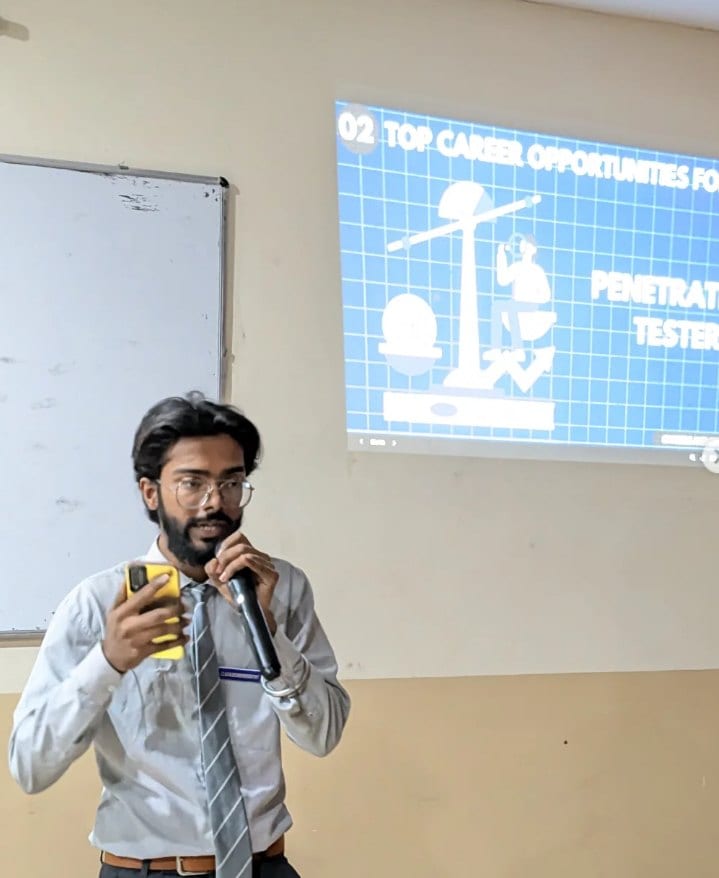
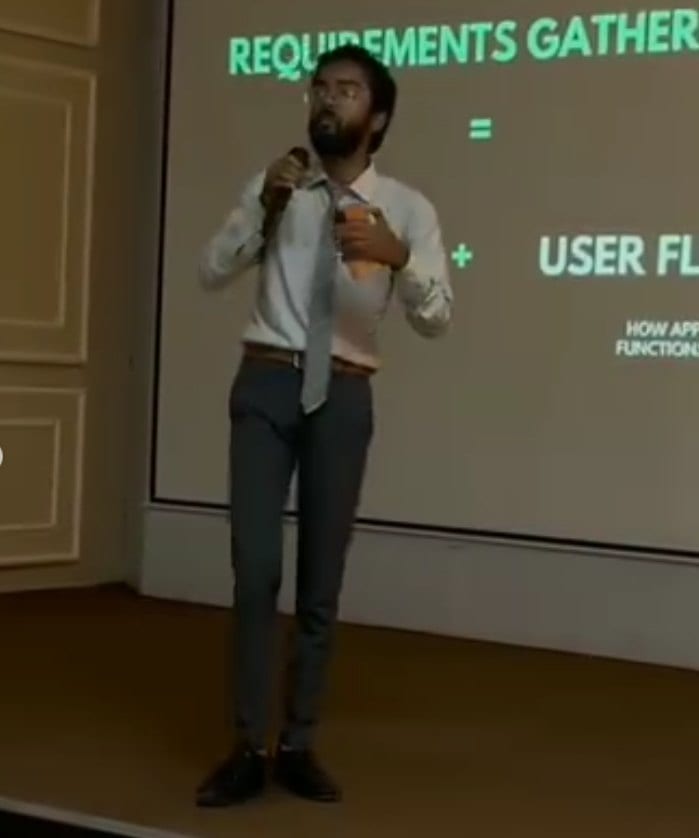
With students
Sessions where this advice gets given in person.
Read next
Roles, pay, internships and interviews.
Want the first AI role sooner?
I mentor students through portfolio, outreach and interviews until the offer arrives.