
A mentor shortens the path by telling you the truth.
A mentor is someone further along the road who looks at your actual work and tells you what to do next, honestly. You find one by doing visible work and asking specific questions, not by requesting mentorship in the abstract. I have mentored more than two hundred students across twenty-plus sessions, and the ones who got the most arrived with a project and a question.
- A mentor gives
- Direction, feedback, introductions, perspective
- You bring
- Work in progress and specific questions
- Find them
- Communities, events, open source, people whose work you use
- I mentor
- 200+ students; remote and on campus

- 20+campus sessions
- 200+students mentored
- 500+community members
Questions students ask
The mentoring questions searched most, answered from both sides.
What is mentor and mentee?
A mentor is a person with experience in a field who guides someone earlier in it; a mentee is the person being guided. The relationship is built on the mentee's real work and goals: the mentor reviews, advises, challenges and opens doors, and the mentee does the work, asks good questions and reports back. It can be formal, through a programme with scheduled sessions, or informal, a person you message when stuck. The best mentoring is specific: not 'how do I get into AI' but 'here is my retrieval project, recall is low, what would you check first'. That specificity is what makes a mentor's time worth giving.
What does a mentor do?
- Looks at your actual work and says what is good, what is weak and what to do next.
- Shortens search: points you to the right resource, tool or approach instead of the ten you would have tried.
- Sets a standard: shows what good looks like in your field so you aim at it.
- Holds you to commitments: a monthly check-in makes projects finish.
- Introduces you: to communities, events, internships and people, when you have earned it with work.
- Tells you the uncomfortable thing: the project is not ready, the résumé is padded, the plan is vague.
- Does not do the work for you; the doing is yours.
What is a career mentor?
A career mentor focuses on the path rather than the project: which roles to aim for, how the field works, what to learn next, how to present yourself, when to move. They are usually a few years ahead in the role you want, so their advice is current, or much further ahead with a broad view. A technical mentor and a career mentor can be the same person or different people; students in AI benefit from one of each. The career mentor's most valuable contribution is often a single honest conversation about where you actually stand compared with where you think you stand.
How to find a mentor
Do visible work first: a project with a live link, a write-up, a contribution to something public. Then ask specific questions of specific people: the maintainer of a tool you use, a speaker whose talk helped you, a senior in your community, an engineer whose write-up you learned from. Lead with what you built and the one question you are stuck on; short, concrete, with a link. Many will answer once; a few will keep answering, and that is a mentor. Communities, hackathons and open source are where these conversations start naturally. Nobody responds to 'will you be my mentor'; everyone responds to a good question about real work.
How to find a career mentor
Look for people two to five years ahead in the exact role you want, because their path is recent enough to be actionable. Find them through alumni networks, LinkedIn with a specific message about their work, community events, and the companies you admire. Ask for twenty minutes with three questions prepared about their path, their day and what they would do in your position. Follow up with what you did as a result; mentors continue with people who act on advice. Formal programmes at colleges and communities also match mentors; the matched relationship still only works if you bring work and questions. My own mentoring page describes how students book time with me.
Why mentor is important in life
Because most of what slows people down is not lack of ability but lack of direction: learning the wrong things in the wrong order, polishing a project nobody needs, misjudging where they stand, not knowing which door to knock on. A mentor who has walked the path removes months of that in a conversation. They also give permission: to aim higher, to stop a dead-end, to apply before feeling ready. And they model standards; seeing how a strong engineer works changes what you expect of yourself. The students I have watched move fastest all had someone honest looking at their work regularly.
How to mentor students
Ask to see the work before giving advice; most student questions dissolve when you look at the actual project. Give one or two things to do next rather than a complete plan, and set a date to see them done. Be honest and kind at the same time: name the weakness, then the way through it. Teach how to find answers, not only the answers. Connect them to peers so they learn from each other; a cohort outlasts any single mentor. Celebrate finishing, because finishing is the habit that matters most. And keep it sustainable: a regular slot, office hours, group sessions where questions repeat. The sessions I run on campus and remotely follow that pattern, and the remote mentoring guide on my site covers the logistics.
How to mentor someone professionally
Agree the scope at the start: what the mentee wants in the next few months, how often you will meet, and what they will bring to each session. Keep sessions focused on their work and decisions rather than on general advice. Share your own mistakes; they teach more than your successes. Give feedback early and specifically, and separate observations from judgements. Open doors when the mentee has earned it, and be clear about what an introduction costs you. Respect the boundary between mentoring and managing; you are not responsible for their outcomes, they are. Review the arrangement every few months and let it end naturally when they outgrow it, which is the goal.
How does mentoring help the mentor?
Explaining something to a beginner is the fastest way to find out what you do not understand, so mentoring sharpens your own fundamentals. It keeps you current, because mentees ask about the tools and problems of today. It builds reputation and network: the students you help become colleagues, collaborators and sources of opportunities within a few years. It develops judgement and communication, the skills that move engineers into leadership. And it is satisfying in a way that shipping features is not. Much of the speaking and judging I do now grew out of mentoring first-years on campus, and the community that formed around it.
Where to put mentorship on resume
If you were mentored, it does not go on the résumé; it shows in the work. If you mentored others, it belongs under experience, leadership or community, with specifics: how many people, over what period, in what, and one outcome, such as mentees who placed at a hackathon, shipped a project or secured internships. Mentoring is evidence of communication, judgement and generosity, which interviewers value, especially for roles with any leadership. State it in one or two lines with a number; a mentoring programme you ran or a community you built is a project in its own right and can be described as one.
How to ask for help that gets answered
The message that turns a stranger into a mentor.
- 01
Lead with the work
One line on what you built, with a link.
- 02
One specific question
What you tried, what happened, what you are stuck on.
- 03
Respect the time
Short message; no 'be my mentor'; thank them either way.
- 04
Report back
What you did with the answer. That is what starts a relationship.
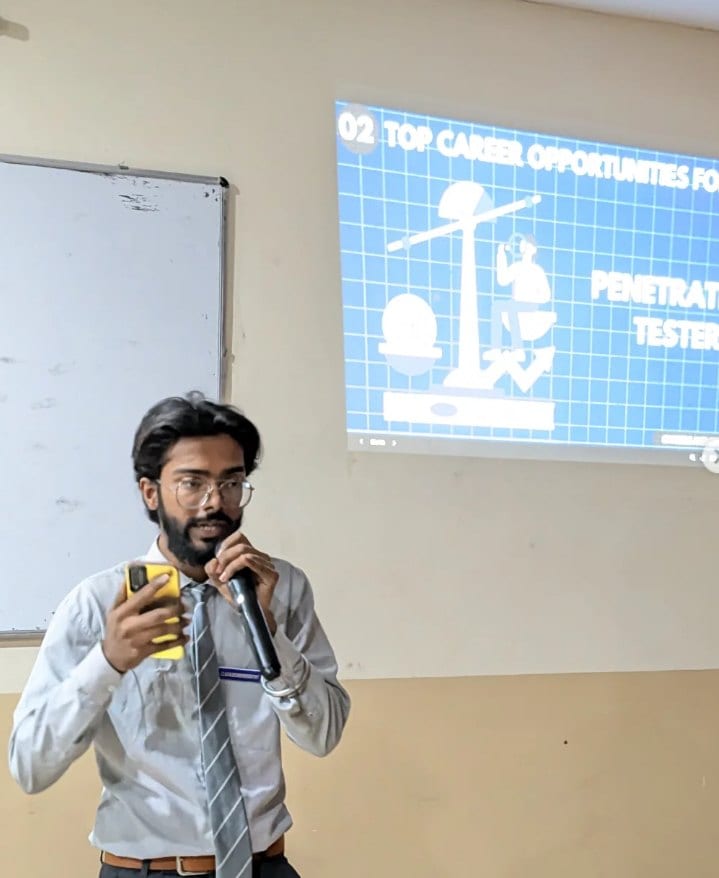
On stage
A few of the sessions.

Read next
Learning, community and the path.
Want honest direction on your work?
Bring a project and a question. I mentor students and career-changers, on campus and remotely.