
A community turns one builder into fifty.
A student tech community or coding club is a group on campus that learns and builds together: weekly sessions, projects, hackathon teams, talks, mentoring of juniors. Join one if it exists; start one if it does not. I helped build Techverse Enclave on campus into a community of more than five hundred with a fourteen-member core team, and the playbook is public.
- A community does
- Sessions, projects, teams, talks, mentoring
- Start with
- Five people, a weekly slot, one shipped thing
- Lasts because
- A core team, a cadence, succession
- I built
- Techverse Enclave: 500+ members, 14-member team

- 20+campus sessions
- 200+students mentored
- 500+community members
Questions students ask
The community and coding club questions searched most, answered from building one.
What is student community?
A student community is a group of students organised around a shared interest, here technology, that meets regularly, learns together and does things together that individuals could not: run events, form hackathon teams, host speakers, mentor juniors, build projects for the campus. It differs from a class in being voluntary and peer-led, and from a friend group in having a purpose and a structure. Good ones give members three things: people to learn from, people to build with, and a place to be seen. Many careers in tech, including mine, trace back to a campus community.
What is coding club?
A coding club is the most common form of student tech community: a group that meets to learn programming and build software, through workshops, practice sessions, projects and competitions. Clubs range from a few friends solving problems together to large societies with sub-teams for web, AI, competitive programming and events. The term is used at schools, where clubs introduce children to programming, and at colleges, where they are the engine of hackathon participation and peer learning. Whatever the size, the useful core is the same: a regular slot, something to build, and people who show up.
What is coding club in college?
In college a coding club is usually a student-run society, sometimes with a faculty advisor, that organises weekly sessions, hosts workshops and guest talks, runs or sends teams to hackathons, maintains a presence online, and often builds things for the campus. Membership is open; the core team is elected or appointed and turns over each year. Good college clubs are where first-years find mentors and projects, where seniors practise leading, and where companies and speakers connect with students. Weak ones are a group chat and a logo; the difference is whether anything gets built and whether juniors are brought in.
What is technical club in college?
A technical club is the broader category: coding clubs, robotics and electronics clubs, AI and data societies, open-source groups, cybersecurity clubs, design and product clubs, and the technical wing of a college's cultural or departmental societies. Each centres on making something: code, hardware, models, designs. Colleges often have several and they overlap in people and events. For a student the choice is less about the label than about which club actually builds and ships; join the one with projects you can see and seniors who answer questions, and if none exists, start one around the thing you want to build.
What is programming club?
Programming club and coding club mean the same thing in most places; some colleges use programming club for a group focused on competitive programming, practising algorithmic problems for contests, and coding club for a broader builder community. Both are valuable and they train different muscles: contests sharpen algorithms and speed; building sharpens scoping, integration and shipping. The strongest campus communities run both tracks under one roof, so that competitive programmers join hackathon teams and builders learn algorithms before interviews. If your college has only one, add the other track as a sub-group.
What is coding club India?
In India, coding clubs exist at most engineering and computer applications colleges, at many schools, and as national and city communities: chapters of global developer programmes, open-source and language communities, and student-run networks that span campuses. Several run large events and are the usual route into Smart India Hackathon teams. National organisations also run clubs for school students. The variation in quality is huge; the ones that work have a weekly cadence, a core team that reproduces itself, and projects that ship. Techverse Enclave, the community I helped build, grew by following that pattern and by welcoming first-years explicitly.
How to join developer community
- On campus: find the club's session or chat, attend twice, and volunteer for a small task; that is how you become a member rather than a name on a list.
- City and national: developer group chapters, open-source meetups, language communities; attend a meetup and introduce yourself with what you build.
- Online: the chat servers of tools you use, communities around hackathon platforms, and open-source projects; contribute a question, an answer, a fix.
- Everywhere: show work, ask specific questions, help someone newer than you. Communities respond to contribution, not to requests for membership.
How to develop community
Start smaller than you think: five people who will show up weekly and one thing to build together. Fix the cadence first, same day, same place, every week, and protect it. Make the first event something that produces an artefact, a workshop where everyone leaves with a deployed page or a working script, so people have a reason to return. Recruit first-years deliberately; they have the time and they are the future core team. Give people roles early and let them own them. Celebrate shipped things publicly. Within a semester you have a community; within a year, if you have trained successors, it survives you. The playbook on my site lays out the steps and the mistakes.
Why is community development important?
Because most learning in technology is social: you learn what to build from seeing what others build, you learn standards from people slightly ahead of you, and you find opportunities through people who know your work. A community compresses all of that onto one campus. It also fills the gap colleges leave: current tools, real projects, hackathon practice, speakers from industry, mentoring. For the people who run it, community development is the first experience of leading, organising and reproducing something larger than themselves, which employers notice and which I would not have become an engineer without.
What is a community developer?
Two meanings. In companies, a community developer or developer advocate builds and supports the community of developers who use a product: content, events, feedback to the product team. On campus, the community developer is the student who builds the club: convenes the sessions, recruits, trains the core team, finds speakers and sponsors, and hands it on. The campus role is one of the best preparations for the professional one, and for leadership generally. If you are the person who keeps asking why nothing happens on your campus, you are the community developer; start with five people and a weekly slot.
Start a community in one semester
The playbook behind Techverse Enclave.
- 01
Weeks 1 to 2
Five committed people; a weekly slot; a name and a chat; one first workshop that ships something.
- 02
Weeks 3 to 8
Weekly sessions; a project track; recruit first-years; give roles.
- 03
Weeks 9 to 14
A hackathon team or an event with a guest speaker; publish what members built.
- 04
Before the break
Name successors; document the playbook; hand over so it survives graduation.
On stage
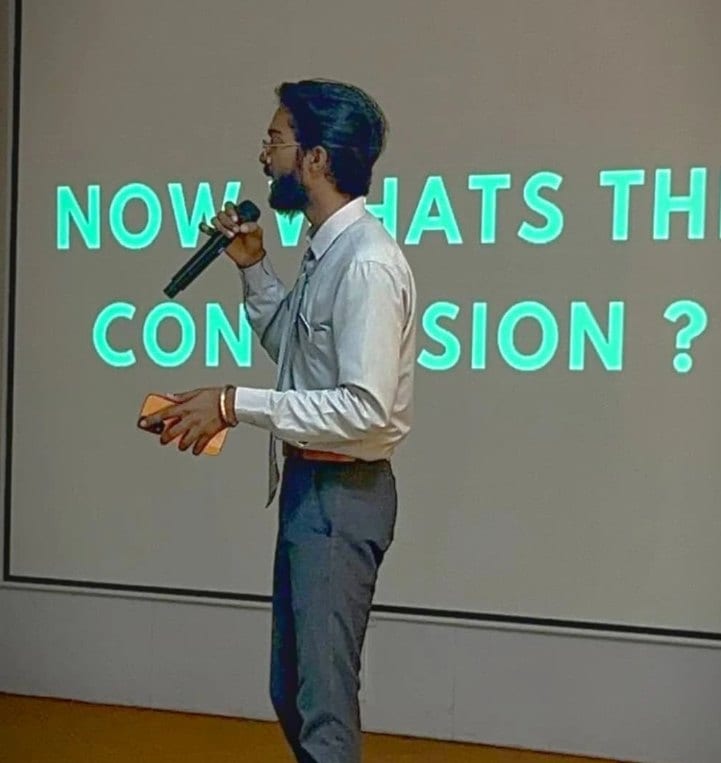
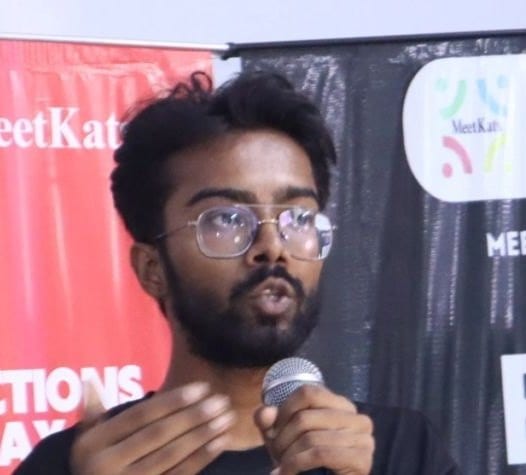
A few of the sessions.
Read next
Mentoring, speaking and the journey.
Starting a community and want a launch session?
I run the first workshop that ships something and leave the club with a playbook and a cadence.